Swiffer Power Mop Review 2026: Is It Worth It?
Are you tired of dragging a heavy bucket around the house every time your floors need a good cleaning? The Swiffer PowerMop promises to change all of that. It claims to give you the deep clean of a traditional mop and bucket in half the time.
But does it actually deliver? In this Swiffer Power Mop review for 2026, I put this popular spray mop through real cleaning tests on multiple floor types. I examined its cleaning power, ease of use, cost over time, and much more.
Whether you have hardwood, tile, or laminate floors, you want a mop that actually works without breaking the bank. I also compared it against top alternatives so you can make the best decision for your home.
Key Takeaways
- The Swiffer PowerMop is an all-in-one mopping system that includes a spray mop, two disposable mop pads, one bottle of pre-mixed cleaning solution, and two AA batteries. You can start cleaning right out of the box with no extra purchases required.
- It weighs only 4.5 pounds, making it one of the lightest spray mops on the market. The 360-degree swivel head lets you reach tight corners, under furniture, and along baseboards with minimal effort.
- Cleaning performance is strong for everyday messes. The scrubbing strips on the pads lift sticky spills, dried food, and light grime. However, it struggles with large spills and heavy debris like sand, crumbs, and pet hair.
- Ongoing costs add up fast. The disposable pads cannot be washed or reused. You also cannot refill the cleaning solution bottle with a third-party cleaner. Both pads and solution need regular replacement, which increases the total cost of ownership.
- It works best as a maintenance mop, not a deep cleaner. The Swiffer PowerMop excels at quick daily or nightly cleanups. For heavy-duty scrubbing or large area deep cleaning, a reusable microfiber mop or spin mop may serve you better.
- Battery dependency is a minor inconvenience. The spray function runs on 2 AA batteries with no battery life indicator. Batteries can die mid-session, so keeping extras on hand is a smart move.


Last update on 2026-08-27 / Affiliate links / Images from Amazon Product Advertising API
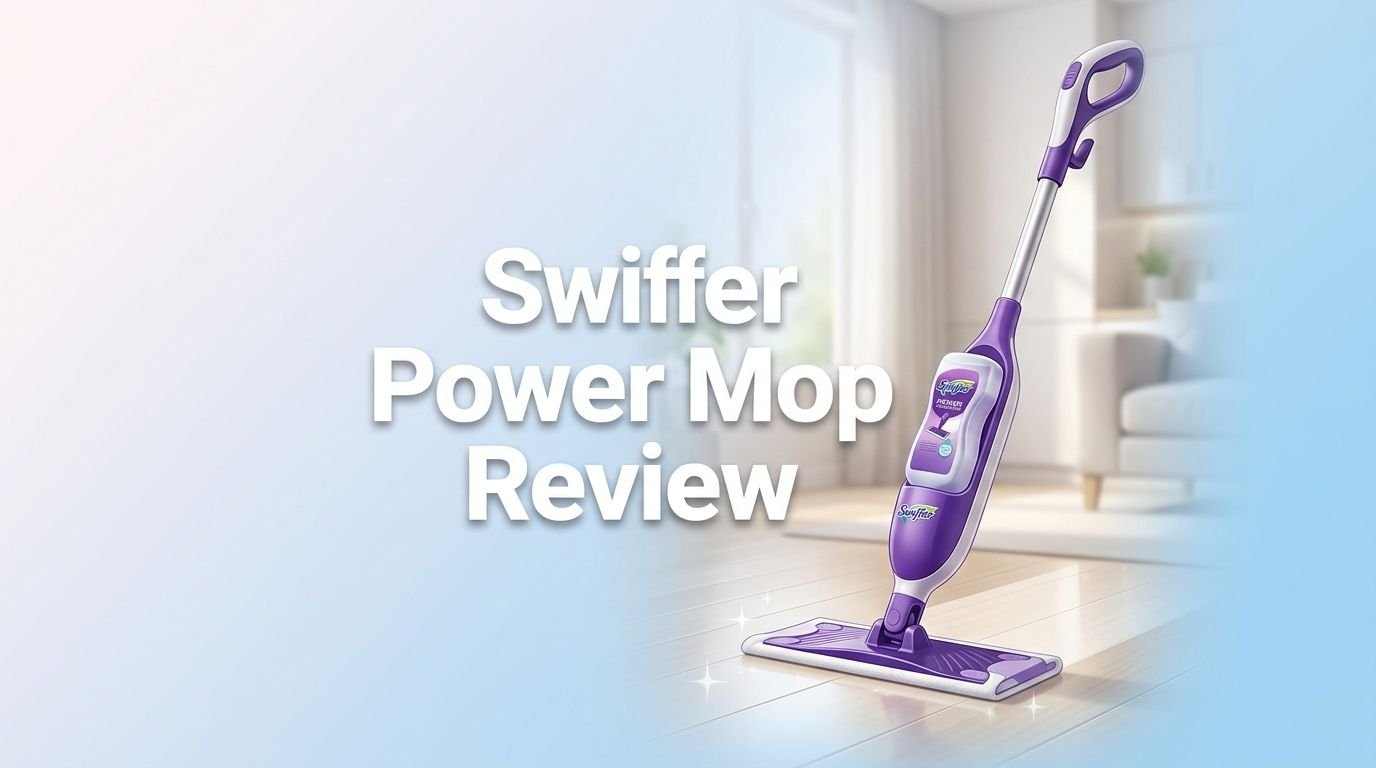
Swiffer PowerMop Multi-Surface Mop Kit Overview
The Swiffer PowerMop Multi-Surface Mop Kit is a battery-powered spray mop made by Procter & Gamble. It launched as a major upgrade to the older Swiffer WetJet. The kit retails for around $25 to $30 at most major retailers.
Inside the box, you get the PowerMop handle (three-piece assembly), one 25.3 oz bottle of pre-mixed cleaning solution with a Fresh Scent, two disposable mopping pads, and two AA batteries. Assembly takes about two minutes.
The mop works on all sealed hard floor surfaces. That includes hardwood, tile, laminate, vinyl, and stone. Swiffer also sells a PowerMop Wood version (ASIN: B0C1F7RRYB) with a citrus-scented quick-dry formula and softer pads built for hardwood floors.
The PowerMop uses a button-activated spray system on the handle. Press the button, and two nozzles at the base spray cleaning solution about 22 inches ahead. Push the mop forward and back to scrub. When done, peel off the dirty pad and toss it.
It sounds simple because it is. That simplicity is the product’s biggest strength.
Design and Build Quality
The Swiffer PowerMop has a lightweight plastic body that feels sturdy enough for daily use. The three-piece handle snaps together with aligned notches. Once assembled, it holds firm without wobbling.
The mop head sits at the base and holds the cleaning solution bottle in front. This front-loaded design keeps the mop balanced. You can lay it completely flat on the floor, which gives you the ability to slide it under couches, beds, and cabinets with very low clearance.
The 360-degree pivoting mop head moves smoothly in all directions. Tight turns around chair legs and table corners feel effortless. There is also a lock feature that keeps the head rigid for cleaning baseboards and vertical edges.
A textured rubber grip sits halfway down the handle. This grip lets you apply extra downward pressure for stubborn spots. It adds comfort and control during longer cleaning sessions.
The overall build feels solid for the price range. It does not feel premium, but it does not feel cheap either. For a $25 to $30 mop, the quality matches the cost.
Cleaning Performance on Hard Floors
The Swiffer PowerMop delivers strong cleaning results on everyday messes. I tested it on dried juice spills, sticky syrup, muddy footprints, and kitchen grease spots. It handled all of these with ease.
The secret is in the mop pads. Each pad has over 300 scrubbing strips on the bottom surface. These strips act like tiny fingers that dig into crevices and lift grime. They perform far better than the flat pads on the older Swiffer WetJet.
The pre-mixed cleaning solution breaks down sticky residue quickly. It also dries fast, which helps protect wood floors from moisture damage. You do not need to rinse the floor after mopping.
The mop head measures 15.25 inches wide. That wide coverage means fewer passes to clean a room. A typical kitchen floor takes about five to eight minutes with the PowerMop.
However, the mop does not pick up large debris well. Crumbs, sand, pet hair, and dirt particles tend to get pushed around rather than absorbed. You need to sweep or vacuum before mopping for the best results. This is a common limitation among spray mops, but it is worth noting.
Top 3 Alternatives for Swiffer PowerMop
1. Bona Hardwood Floor Premium Spray Mop

Last update on 2026-08-27 / Affiliate links / Images from Amazon Product Advertising API
2. O-Cedar EasyWring Microfiber Spin Mop and Bucket System

Last update on 2026-08-27 / Affiliate links / Images from Amazon Product Advertising API
3. BISSELL SpinWave Cordless Pet Hard Floor Spin Mop

Last update on 2026-08-27 / Affiliate links / Images from Amazon Product Advertising API
Ease of Use and Setup
Setting up the Swiffer PowerMop takes less than three minutes. You snap the three handle pieces together, insert two AA batteries, click the solution bottle into its holder, and attach a mop pad. No tools are needed.
Using the mop is just as easy. Press the button on the handle to spray solution onto the floor. Push and pull the mop to scrub. The mop glides smoothly on hard surfaces without resistance.
The disposable pads attach with a Velcro-style fastening system. Putting a new pad on takes about five seconds. Removing a dirty pad is equally quick. You never have to touch a dirty mop head or wring out a sopping pad over a bucket.
This system works well for busy parents, pet owners, and anyone who hates the traditional mop-and-bucket routine. The entire process from start to finish feels fast and frictionless.
The only minor hassle is the battery replacement. Since there is no indicator for battery level, you might get caught mid-clean with a dead spray. Keeping a pack of AA batteries nearby solves this problem.
Mop Pads: Disposable vs. Reusable Debate
The Swiffer PowerMop uses disposable pads only. Swiffer recommends replacing the pad after each cleaning session. You cannot wash and reuse these pads.
This creates a clear divide among users. People who value convenience love the toss-and-go system. People who value economy and sustainability find it wasteful and expensive.
A pack of PowerMop pad refills costs between $8 and $15 depending on the pack size. If you mop three times per week, you could spend $30 to $50 per month on pads alone. That adds up to over $400 per year.
By comparison, reusable microfiber mop pads like those from Bona or O-Cedar cost almost nothing to maintain after the initial purchase. You just toss them in the washing machine.
Some third-party sellers on Amazon do offer reusable pads that fit the PowerMop. These aftermarket pads can reduce the ongoing cost. However, they may not grip the Velcro strips as tightly as the official Swiffer pads.
If long-term cost matters to you, this is the PowerMop’s biggest weakness.
Cleaning Solution: What You Should Know
The Swiffer PowerMop uses a proprietary pre-mixed cleaning solution. The 25.3 oz bottle clicks directly into the mop’s solution holder. You cannot refill it with your own cleaning products.
The solution comes in several scent options including Fresh, Lavender, and Lemon (for the Wood version). It works well on most sealed hard floors. The formula breaks down sticky messes quickly and dries within minutes.
However, the scent is strong. The formula contains alcohol, phenoxyisopropanol, and synthetic fragrances. In small rooms or poorly ventilated areas, the smell can feel overwhelming. Opening a window during and after mopping is a good idea.
Swiffer does not currently offer a fragrance-free version. This is a disappointment for people with scent sensitivities, allergies, or respiratory concerns.
A single bottle of solution typically lasts 15 to 25 cleaning sessions depending on how much you spray. Replacement bottles cost between $7 and $10 each. Combined with the pad costs, the total upkeep price climbs steadily.
Swiffer PowerMop vs. Swiffer WetJet
Many shoppers wonder if the PowerMop is worth upgrading from the older Swiffer WetJet. The short answer is yes, but there are trade-offs.
The PowerMop has a wider mop head (15.25 inches vs. about 10 inches for the WetJet). This means faster coverage with fewer passes. The PowerMop pads are also significantly thicker with scrubbing strips that the WetJet pads lack.
The PowerMop’s solution bottle sits in the front, allowing the mop to lay flat. The WetJet stores its solution in the back, which lifts the mop head off the floor. This makes the PowerMop better for reaching under furniture.
The spray range is also improved. The PowerMop sprays about 22 inches ahead compared to 19 inches for the WetJet.
On the downside, PowerMop replacement pads cost more than WetJet pads. The PowerMop also uses AA batteries instead of the WetJet’s 4 AA batteries, which is a minor advantage.
Overall, the PowerMop feels like a meaningful upgrade in cleaning power and usability. If you already use a WetJet and enjoy the Swiffer system, the PowerMop is a worthwhile step up.
Battery Life and Power
The Swiffer PowerMop runs on 2 AA batteries that power the spray mechanism. The starter kit includes a pair of batteries, so you can use the mop right away.
Battery life varies based on usage frequency. Most users report getting several weeks of regular use from a single pair of batteries. If you mop daily, expect to replace batteries roughly once a month.
The biggest complaint about the battery system is the lack of a battery life indicator. You have no way to check remaining battery power. The only sign that batteries are dying is a weakening spray. Eventually, the spray stops completely.
Rechargeable AA batteries are a smart investment if you use the PowerMop often. They reduce waste and save money over time compared to disposable alkaline batteries.
Some users wish Swiffer had included a built-in rechargeable battery with a USB charging port. Given the mop’s price point, this would likely raise the retail cost. But it would also remove a significant frustration.
Best Floor Types for the Swiffer PowerMop
The Swiffer PowerMop works on all sealed and finished hard floor surfaces. This includes sealed hardwood, ceramic tile, porcelain tile, laminate, luxury vinyl plank (LVP), luxury vinyl tile (LVT), and natural stone.
For hardwood floors, the standard PowerMop works fine. But the dedicated PowerMop Wood version uses a gentler formula that dries faster. It also features LED lights on the mop head to illuminate dirt and dust in dark areas.
On tile floors with deep grout lines, the PowerMop can struggle. The scrubbing strips on the pads tend to catch on grout lines and uneven surfaces. This can cause the pad to detach from the mop head mid-clean. If your tile has wide or deep grout, you may need to mop more carefully.
The PowerMop should not be used on unfinished wood, waxed floors, unsealed tile, or carpeted surfaces. The cleaning solution and moisture can damage these floor types.
For vinyl and laminate floors, the PowerMop performs exceptionally well. These smooth surfaces allow the mop head to glide without snagging. The fast-drying formula prevents moisture from seeping into seams.
Who Should Buy the Swiffer PowerMop?
The Swiffer PowerMop is ideal for specific types of users. Understanding whether you fit the profile can save you money and frustration.
Busy parents benefit the most. Kids create constant messes. The PowerMop lets you clean a sticky juice spill in under two minutes without hauling out a bucket. Speed and convenience are its core strengths.
Pet owners also appreciate the quick cleanup ability. Muddy paw prints, water bowl splashes, and minor accidents can be handled fast. However, the pads do not pick up pet hair well, so you still need a vacuum.
Apartment dwellers with small living spaces find the PowerMop practical. It stores upright in a closet or pantry. There is no bulky bucket to store, and the mop itself is slim and compact.
The PowerMop is not the best choice for people who deep clean large homes weekly. The disposable pad costs become excessive at that frequency. A reusable microfiber mop system like the Bona Premium Spray Mop or the O-Cedar EasyWring Spin Mop is more economical for heavy use.
If you want a quick-grab maintenance mop for daily touch-ups, the Swiffer PowerMop fits that role perfectly.
Long-Term Cost of Ownership
Let’s break down the real cost of owning a Swiffer PowerMop over one year. This is important because the upfront price does not tell the full story.
The starter kit costs about $25 to $30. That gets you two pads, one bottle of solution, and two batteries. After that, ongoing costs begin.
If you mop three times per week, you use about 12 pads per month. A 5-pack of replacement pads costs around $10, so monthly pad costs run about $24. That is roughly $288 per year on pads alone.
Cleaning solution lasts longer. A single bottle handles about 20 sessions. At three sessions per week, you go through roughly one bottle every seven weeks. At $8 per bottle, that is about $60 per year.
Add in batteries at around $10 per year, and your total annual cost sits near $360 to $400. That is a significant recurring expense for a mop.
By comparison, a Bona spray mop with washable pads and refillable solution costs about $40 upfront and $30 to $50 per year in solution refills. The difference in long-term cost is dramatic.
The Swiffer PowerMop trades economy for convenience. You pay more, but you skip the washing and refilling.
Pros and Cons Summary
Last update on 2026-08-27 / Affiliate links / Images from Amazon Product Advertising API
The Swiffer PowerMop has clear strengths. It is lightweight at 4.5 pounds. It sets up in minutes. The 360-degree swivel head reaches tight spaces. The scrubbing strip pads clean sticky messes effectively. The fast-drying solution protects floors. And the entire mopping process feels effortless.
It also has clear weaknesses. Disposable pads create ongoing costs that exceed $280 per year with regular use. The cleaning solution has a strong artificial scent. Pads can detach on rough or uneven floors. It cannot pick up large debris. And the battery system lacks a power level indicator.
The value proposition depends on your priorities. If you value speed, simplicity, and zero maintenance, the PowerMop delivers. If you value long-term savings and sustainability, a reusable mop system is the better investment.
For many households, the best approach is to own both. Keep the Swiffer PowerMop near the kitchen for quick daily touch-ups. Use a reusable microfiber mop for your weekly deep cleaning routine. This combination gives you the best of both approaches.
Final Verdict: Is the Swiffer PowerMop Worth Buying in 2026?
The Swiffer PowerMop remains one of the most convenient spray mops you can buy in 2026. It does exactly what it promises. It makes mopping fast, easy, and mess-free.
For daily maintenance cleaning, it is hard to beat. The scrubbing pads handle sticky messes better than most competitors in the disposable pad category. The wide mop head covers ground quickly. And the lightweight body causes zero fatigue during use.
The biggest downside is cost. If you use this mop frequently, you will spend hundreds of dollars per year on pads and solution. That is a real financial consideration.
My recommendation? Buy the Swiffer PowerMop if you want a fast, no-fuss mop for quick daily cleanups. Skip it if your primary need is a deep-cleaning mop for large spaces on a tight budget.
At $25 to $30 for the starter kit, the entry price is low enough to try it without much risk. Most people who try it end up keeping it as a permanent part of their cleaning routine.
Frequently Asked Questions
Does the Swiffer PowerMop work on hardwood floors?
Yes, the Swiffer PowerMop works on all sealed and finished hardwood floors. Swiffer also offers a PowerMop Wood version with a gentler, faster-drying lemon-scented formula. This version is specifically made for wood surfaces. Do not use any PowerMop model on unfinished or waxed hardwood, as the moisture and solution may cause damage.
Can you reuse Swiffer PowerMop pads?
Swiffer designs the PowerMop pads for single use only. They are disposable and cannot be machine washed. However, some third-party sellers offer reusable microfiber pads that fit the PowerMop head. These aftermarket pads vary in quality, so check reviews before buying.
How long does the Swiffer PowerMop cleaning solution last?
One 25.3 oz bottle typically lasts between 15 and 25 cleaning sessions. The exact number depends on how much solution you spray per session. Heavier spraying will drain the bottle faster. Replacement bottles cost between $7 and $10 each.
Is the Swiffer PowerMop better than the Swiffer WetJet?
The PowerMop is a significant upgrade over the WetJet. It has a wider mop head, thicker pads with scrubbing strips, better spray range, and a front-loaded design that lets it lay flat. The trade-off is that PowerMop pads cost more than WetJet pads.
Can you use your own cleaning solution in the Swiffer PowerMop?
No. The Swiffer PowerMop uses proprietary solution bottles that click into the mop. You cannot refill these bottles or use third-party cleaners. This is one of the product’s most common criticisms, as it locks you into buying Swiffer-branded solution.
How often should you replace the batteries in the Swiffer PowerMop?
Battery life depends on how frequently you use the mop. Most users report several weeks of daily use before needing new batteries. Since there is no battery indicator, watch for a weakening spray pattern. Rechargeable AA batteries are a cost-effective and eco-friendly option.
Hi, I’m Rose Callahan, the creator of SpaceSmart.blog.
I review home essentials, gadgets, security tools, kitchen gear, furniture, and cleaning products from Amazon.
My goal is to help you create a smarter, more organized, and comfortable living space.
I test and share practical products that make everyday home life easier and more efficient.
Join me as I explore clever ways to upgrade your home—one smart find at a time.