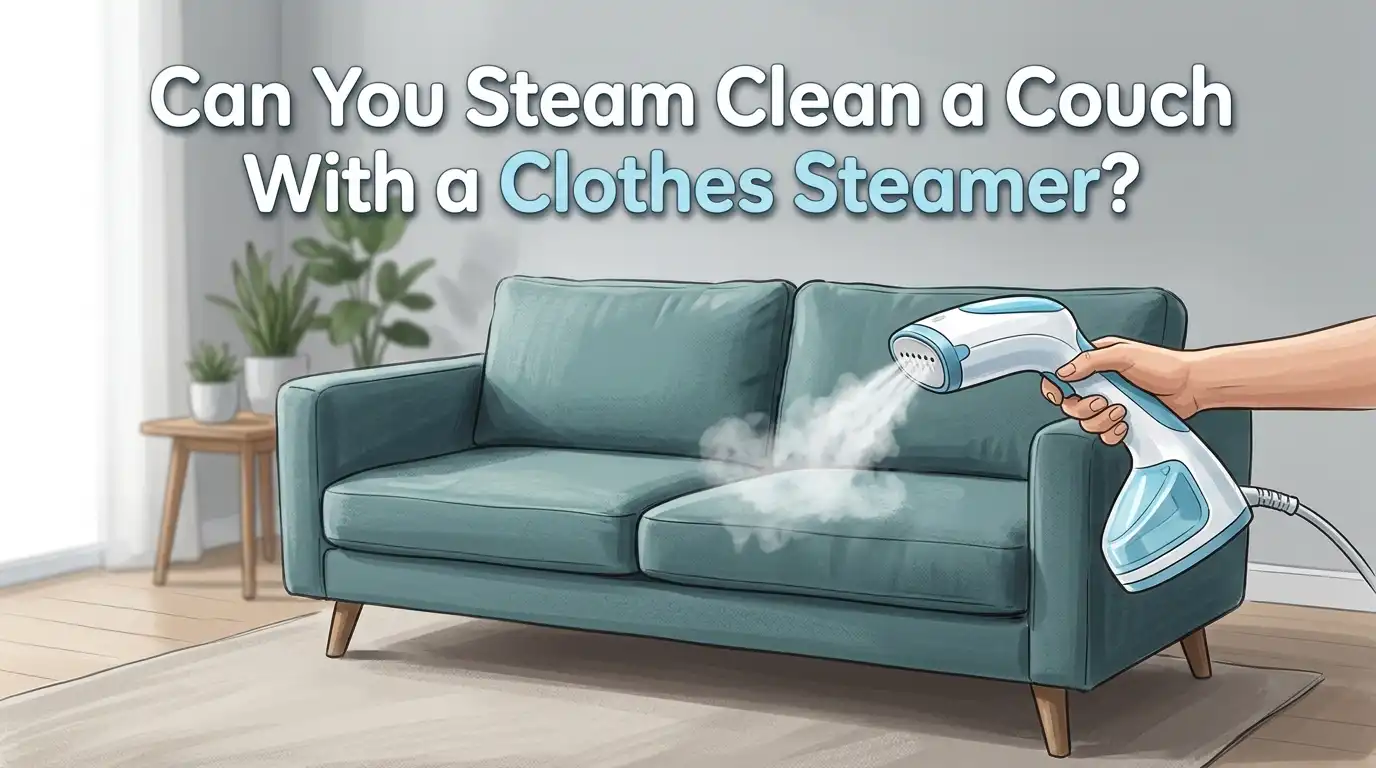
Can You Steam Clean a Couch With a Clothes Steamer?
Your couch has seen better days. Between pet hair, food spills, and everyday dust, that once fresh sofa now looks tired and smells stale. You glance at your clothes steamer sitting in the closet and wonder: can you actually use that thing on your couch?
The short answer is yes, you can. A clothes steamer can freshen up, sanitize, and lightly clean most fabric couches. But there are important limits to what it can do, and a few things you need to check before you start blasting steam at your furniture.
This guide walks you through every step of the process. You will learn which fabrics are safe, how to prepare your couch, the right technique to use, and the common mistakes that can ruin your upholstery.
In a Nutshell
- Check your couch’s cleaning code first. Fabrics labeled “W” (water safe) or “W/S” (water or solvent safe) are generally safe for steam. Fabrics labeled “S” (solvent only) or “X” (vacuum only) should never be steamed. Ignoring this step can cause permanent damage like shrinking, warping, or water rings.
- A clothes steamer is not the same as an upholstery steam cleaner. Garment steamers produce lighter steam and lack suction or extraction power. They can sanitize surfaces and loosen light dirt, but they cannot pull deep grime or heavy stains out of fabric the way a dedicated upholstery cleaner can.
- Always do a spot test on a hidden area before steaming the entire couch. Even fabrics labeled as water safe can react to heat differently. Test a small patch on the back or underside and wait for it to dry completely before you proceed.
- Use distilled water in your steamer to avoid mineral deposits. Tap water contains minerals that can leave white residue or build up inside your steamer over time. Distilled water keeps both your couch and your appliance clean.
- Drying is just as important as the cleaning itself. Excess moisture left in upholstery can lead to mold, mildew, and unpleasant odors. Blot the fabric after steaming, use fans, and open windows to speed up the drying process.
- For heavy stains or deeply soiled couches, consider a professional cleaning or a dedicated upholstery steam cleaner. A clothes steamer is a great maintenance tool, but it has limits. Know when to call in reinforcements.
What a Clothes Steamer Actually Does to Fabric
A clothes steamer heats water to produce a continuous flow of hot steam, usually between 200 and 300 degrees Fahrenheit. This hot vapor relaxes fabric fibers, removes wrinkles, and kills many common bacteria and dust mites on contact.
On a couch, the steam penetrates the top layer of fabric and loosens light surface dirt, pet dander, and odor molecules. The heat also sanitizes the surface without the need for chemical sprays or detergents.
However, a garment steamer does not have an extraction system. It cannot suck dirt and moisture back out of the fabric. This means it pushes loosened grime around rather than removing it entirely. You will need a clean cloth to wipe away what the steam brings to the surface.
Clothes Steamer vs. Upholstery Steam Cleaner: Key Differences
Understanding the difference between these two tools saves you from disappointment. A clothes steamer produces a gentle stream of steam meant to relax fabric and kill germs. An upholstery steam cleaner combines hot water injection with powerful suction to extract dirt from deep within the fabric.
A garment steamer works well for surface level refreshing, odor removal, and light sanitizing. It is an excellent maintenance tool between deeper cleanings. An upholstery steam cleaner, on the other hand, can remove embedded stains, ground in dirt, and allergens that sit deep in the cushion padding.
Pros of using a clothes steamer on your couch: It is affordable, easy to use, chemical free, and great for quick freshening. Most people already own one. Cons: It cannot deep clean, has no extraction power, and may leave too much moisture if used carelessly.
Pros of a dedicated upholstery steam cleaner: It offers deep extraction cleaning, better stain removal, and professional level results. Cons: It costs more, takes longer, and requires more setup and cleanup.
How to Check if Your Couch Fabric Is Safe for Steam
Before you touch your steamer, flip your couch cushions or look under the frame for the manufacturer’s care tag. This tag contains a cleaning code that tells you exactly what methods are safe for your fabric.
Code W means water based cleaning is safe. Steam cleaning falls into this category, so you are good to go. Code W/S means both water based and solvent based cleaners work. Steam is also safe here.
Code S means solvent only. Do not use steam on S coded fabrics. Water can cause shrinking, ring marks, and permanent damage to natural fibers like silk, linen, and some wool blends. Code X means vacuum only. No water, no solvents, and definitely no steam.
If your couch has no tag, contact the manufacturer or test an inconspicuous area first. Microfiber, polyester, nylon, and cotton blends typically handle steam well. Velvet, velour, silk, and untreated leather should be avoided.
Step by Step: How to Steam Clean Your Couch With a Clothes Steamer
Follow these steps for the best results without risking damage to your upholstery.
Step 1: Vacuum thoroughly. Remove all loose dirt, crumbs, pet hair, and debris. Pay extra attention to crevices, seams, and under cushions. Skipping this step means the steam will just push dirt deeper into the fabric.
Step 2: Pre treat visible stains. Blot any stains with a clean damp cloth and a mild upholstery cleaner. Never rub a stain, as this pushes it deeper and spreads it wider. Let the pre treatment sit for a few minutes.
Step 3: Fill your steamer with distilled water. Tap water leaves mineral deposits on fabric and inside your machine. Allow the steamer to heat up fully before starting.
Step 4: Do a spot test. Steam a small hidden section of the couch. Wait for it to dry completely and check for discoloration, shrinkage, or texture changes.
Step 5: Steam in sections. Work in small areas of about one to two square feet at a time. Hold the steamer nozzle about six to eight inches from the fabric and move it slowly in straight, overlapping strokes.
Step 6: Blot immediately. After steaming each section, press a clean white microfiber cloth against the fabric to absorb loosened dirt and excess moisture.
Step 7: Let it dry completely. Open windows, turn on ceiling fans, or use a portable fan to circulate air. Avoid sitting on the couch until it is fully dry.
Best Techniques for Even and Effective Steaming
Technique matters more than you might think. Random, hasty steaming can leave your couch looking patchy and unevenly cleaned.
Work from the top of the couch down to the bottom. This lets gravity pull any dripping moisture away from already cleaned areas. Start with the back cushions, then move to the seat cushions, and finish with the arms.
Keep the steamer moving at a steady, consistent pace. Holding it in one spot too long saturates that area with moisture and can cause watermarks. Move at roughly the speed you would glide an iron over a shirt.
Use overlapping strokes so you do not miss any spots. Overlap each pass by about an inch. If your steamer has a fabric attachment or brush head, use it. The brush helps lift fibers and loosen surface dirt while the steam does its work.
How to Handle Stubborn Stains With a Clothes Steamer
A clothes steamer alone will not remove set in stains like red wine, coffee, or ink. But it can help soften and loosen the stain so other cleaning methods work better.
Start by pre treating the stain with a small amount of mild dish soap mixed with warm water. Dab the solution onto the stain and let it sit for five minutes. Then hold the steamer over the stain for about 10 to 15 seconds and immediately blot with a clean white cloth.
Repeat this process two or three times if needed. The combination of the cleaning solution and steam heat breaks down the stain molecules more effectively than either method alone.
Pros of this method: It avoids harsh chemicals, is gentle on fabric, and works on many common food and drink stains. Cons: It will not remove old, deeply set stains or dye based stains. For those situations, you may need an enzyme based upholstery cleaner or professional help.
Removing Odors From Your Couch With Steam
One of the best uses for a clothes steamer on a couch is odor elimination. The high temperature steam breaks down odor causing bacteria and neutralizes smells from pets, food, smoke, and sweat.
Before steaming, sprinkle a thin layer of baking soda over the entire couch. Let it sit for 15 to 20 minutes. The baking soda absorbs embedded odors. Vacuum it up thoroughly, then proceed with steaming.
The steam heat kills bacteria on the surface and refreshes fabric fibers, leaving your couch smelling noticeably cleaner. For pet owners, this method is especially effective at reducing that lingering “dog couch” smell.
After steaming, you can lightly mist the couch with a mixture of water and a few drops of essential oil like lavender or tea tree for a pleasant scent. Just make sure the fabric can handle light moisture before doing this.
Common Mistakes That Can Ruin Your Couch
Knowing what not to do is just as important as knowing the correct steps. Here are the most common errors people make.
Over saturating the fabric is the number one mistake. A clothes steamer produces more moisture than many people realize. Hold the nozzle at the right distance and keep it moving. Too much water in the fabric leads to mold, mildew, and musty smells that are worse than the original problem.
Skipping the vacuum step means you are steaming dirt into the fabric instead of removing it. Always vacuum first. Ignoring the care tag can result in ruined upholstery that no amount of cleaning can fix.
Using tap water leaves behind mineral residue that appears as white spots on dark fabrics. Always use distilled water. Not allowing the couch to dry fully before sitting on it traps moisture inside the cushions. Give it at least four to six hours of air drying time, or longer in humid conditions.
How Long Does It Take for a Couch to Dry After Steaming?
Drying time depends on several factors, including the fabric type, how much steam you used, the humidity in your room, and airflow.
For most fabric couches cleaned with a clothes steamer, expect a drying time of two to six hours. Thicker fabrics like canvas or heavy cotton blends take longer. Thinner synthetics like microfiber dry faster.
You can speed up drying by opening all nearby windows, running a ceiling fan, or placing a portable fan directly in front of the couch. A hair dryer on a cool or low heat setting can help with specific damp spots, but avoid using high heat as it can damage some fabrics.
In humid climates or during rainy weather, drying can take up to eight hours or more. If possible, plan your steam cleaning for a dry, warm day with good ventilation. Never cover a damp couch with blankets or cushions, as this traps moisture and creates a breeding ground for mold.
When a Clothes Steamer Is Not Enough
A garment steamer is a fantastic tool for regular maintenance. It keeps your couch smelling fresh, kills surface bacteria, and handles light surface dirt. But certain situations call for something stronger.
If your couch has deep set stains, heavy soiling, or has not been cleaned in years, a clothes steamer will not get the job done. You need an upholstery steam cleaner with extraction capability, or you should hire a professional cleaning service.
Couches in homes with pets, young children, or allergy sufferers benefit from a professional deep clean at least once or twice a year. Use your clothes steamer for monthly or bimonthly maintenance between those deeper sessions.
If you notice your couch developing a musty smell even after steam cleaning, the issue may be deep inside the cushion foam. This requires professional extraction cleaning to fully resolve.
Tips to Keep Your Couch Cleaner Between Steam Sessions
Prevention reduces how often you need to steam clean. A few simple habits can keep your couch fresh for weeks longer.
Vacuum your couch once a week. This removes surface dust, pet hair, and crumbs before they work their way into the fabric. Use the upholstery attachment on your vacuum for the best results.
Treat spills immediately. The faster you blot a spill, the less likely it becomes a permanent stain. Keep a clean cloth nearby and always blot rather than rub.
Use washable throw blankets and slipcovers on high traffic areas. These are easy to toss in the washing machine and protect the fabric underneath. Rotate and flip your cushions regularly to distribute wear and prevent one side from getting dirtier than the other.
Keep pets off the couch when possible, or designate a specific spot with a protective cover. Baking soda sprinkled and vacuumed every two weeks helps control odors between steam sessions.
Frequently Asked Questions
Can a clothes steamer kill dust mites on a couch?
Yes. The high temperature steam produced by most garment steamers exceeds the 130 degrees Fahrenheit needed to kill dust mites. Steam your couch slowly and methodically to give the heat enough time to penetrate the fabric. This makes a clothes steamer a useful tool for allergy sufferers who want to reduce dust mite populations on their furniture.
Is it safe to use a clothes steamer on a leather couch?
It is generally not recommended. Steam can strip natural oils from leather, causing it to dry out, crack, or discolor. If you have a finished or treated leather couch, you might get away with a very quick, light pass at a greater distance. However, the safest approach for leather is to use a dedicated leather cleaner and conditioner instead of steam.
How often should you steam clean a couch with a clothes steamer?
For regular maintenance, steaming your couch once every two to four weeks is a good schedule. If you have pets or children, you may want to steam more frequently. Avoid steaming daily, as repeated moisture exposure can weaken fabric fibers over time and increase the risk of mold.
Can I add vinegar or essential oils to my clothes steamer?
Most manufacturers advise against putting anything other than water in a clothes steamer. Vinegar and essential oils can clog the machine, damage internal components, and void your warranty. If you want to add a scent, lightly mist the couch with a diluted solution from a spray bottle after steaming, not through the steamer itself.
Will a clothes steamer remove pet urine stains from a couch?
A clothes steamer alone will not remove pet urine stains effectively. Urine soaks deep into the fabric and cushion foam. The steam may reduce surface odor temporarily, but the stain and smell will return. For pet urine, use an enzyme based cleaner that breaks down the uric acid crystals, and consider professional extraction cleaning for severe cases.
Can I steam clean microfiber couches with a garment steamer?
Yes, microfiber is one of the best fabrics for steam cleaning. It handles heat and moisture well and dries quickly. Just make sure your microfiber couch has a W or W/S cleaning code on the care tag. After steaming, brush the microfiber with a soft bristled brush to restore its smooth texture and prevent it from looking matted.