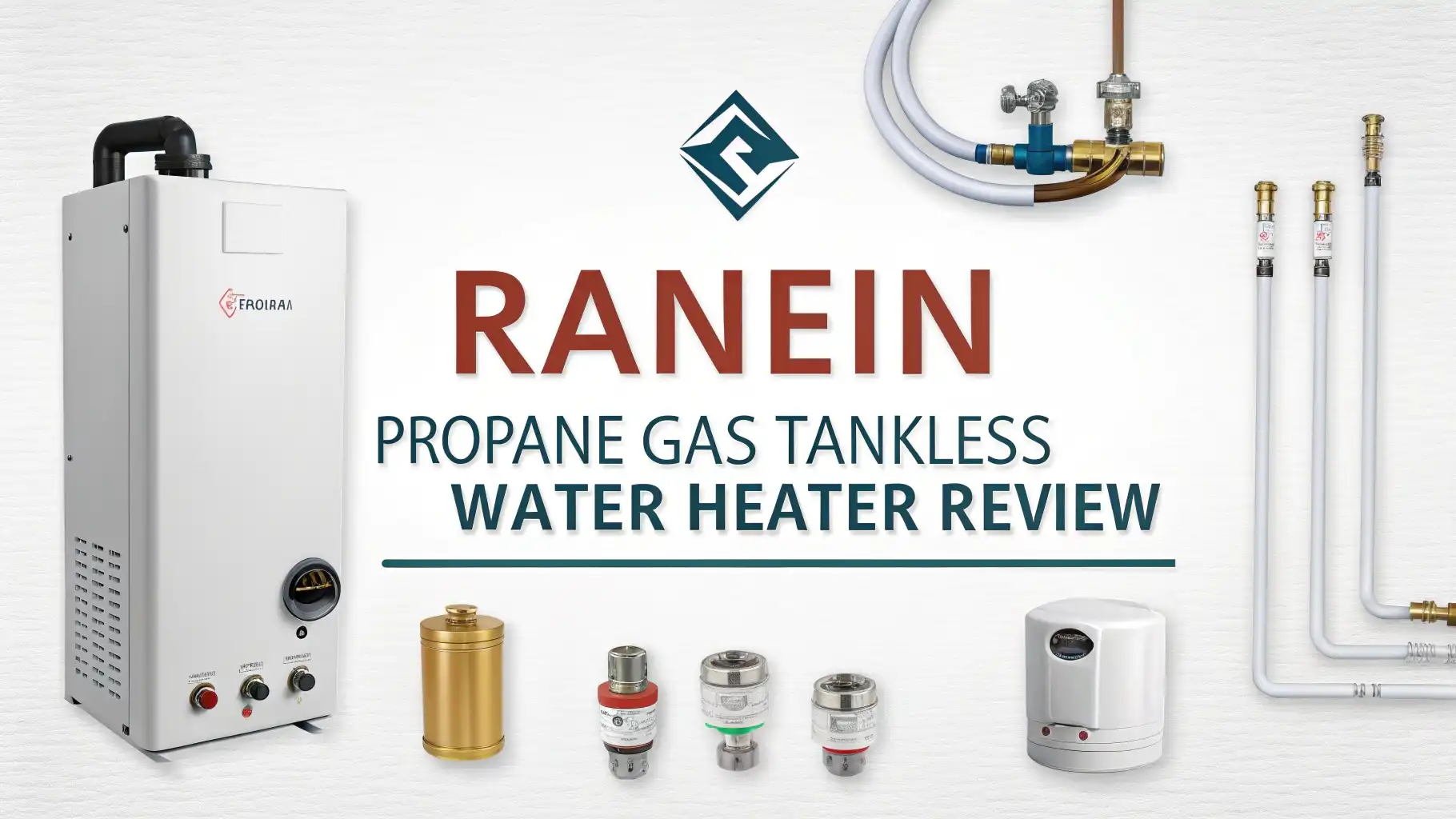
Ranein Propane Gas Tankless Water Heater Review: Step-by-Step Guide
Are you tired of running out of hot water in the middle of your morning shower? Do you want to save money on energy bills while enjoying endless hot water?
The Ranein Propane Gas Tankless Water Heater might be exactly what your home needs. This budget friendly option has been making waves in the water heating market, and today we are diving deep into whether it lives up to the hype.
The Ranein brand offers an affordable entry point into the world of on demand hot water systems, but does affordable mean you sacrifice quality? Let’s find out together.
Key Takeaways:
- Endless Hot Water Supply: The Ranein propane tankless water heater provides continuous hot water without the limitations of traditional tank systems. You can run multiple showers simultaneously without worrying about cold water surprises.
- Energy Efficiency Saves Money: This unit heats water only when you turn on the tap, which can reduce your energy bills by up to 30% compared to conventional tank heaters. The system eliminates standby heat loss completely.
- Compact Design Saves Space: Measuring significantly smaller than traditional 40 or 50 gallon tank heaters, the Ranein unit frees up valuable floor space in your utility room, basement, or installation area.
- Multiple Capacity Options Available: Ranein offers models ranging from 3.6 GPM to 7.4 GPM, allowing you to choose the perfect size for your household needs. A family of four typically needs at least 4.3 GPM for comfortable simultaneous use.
- Budget Friendly Investment: Priced between $239 and $399 depending on the model, Ranein tankless heaters cost significantly less than premium brands like Rinnai or Navien while still delivering reliable performance for most residential applications.

Last update on 2026-08-30 / Affiliate links / Images from Amazon Product Advertising API
Understanding Ranein Propane Gas Tankless Water Heaters
Ranein has positioned itself as an accessible alternative in the tankless water heater market. The company focuses on delivering functional, reliable products without the premium price tag associated with established brands.
Their propane gas models work by heating water as it flows through the unit, using a powerful burner system that activates only when you open a hot water tap.
The technology behind these units is straightforward but effective. When you turn on your hot water faucet, cold water travels through a pipe into the unit.
A flow sensor detects the water movement and ignites the gas burner. The heat exchanger then warms the water to your preset temperature before sending it to your tap. This process happens instantly, which is why these systems are also called “on demand” water heaters.
What makes Ranein stand out is their focus on simplicity and affordability. While premium brands offer advanced features like WiFi connectivity and sophisticated diagnostics, Ranein concentrates on core functionality.
Performance Specifications That Matter
The Ranein propane tankless water heater comes in several configurations. The most popular model offers 4.3 gallons per minute (GPM) flow rate with 100,000 BTU heating capacity.
This specification is crucial because it determines how many fixtures you can run simultaneously. A standard shower uses about 2.5 GPM, while a kitchen faucet uses approximately 1.5 GPM.
For a family of three to four people, the 4.3 GPM model provides enough capacity to run one shower and one sink at the same time.
Larger households might prefer the 5.3 GPM or 7.4 GPM models. The BTU rating indicates how quickly the unit can heat water. Higher BTU means faster heating, which becomes important in colder climates where incoming water temperatures are lower.
Installation Process and Requirements
Installing a Ranein propane tankless water heater requires some planning. The unit needs proper propane gas line connection, adequate venting, and appropriate water line sizing. Most models are designed for indoor installation with included vent pipes, though outdoor models are also available.
You will need a licensed plumber and gas technician for proper installation. The unit requires a 3/4 inch gas line for optimal performance. Venting must follow local building codes, typically using Type B vent pipe for indoor units. The electrical requirements are minimal, usually just a standard 120V outlet for the control panel and ignition system.
Water pressure requirements range from 15 to 110 PSI for optimal operation. If your home has low water pressure, you might need a booster pump. The unit works best with incoming water pressure above 30 PSI. Cold weather installations benefit from freeze protection features, which are included in most Ranein models.
Top 3 Alternatives for Ranein Propane Gas Tankless Water Heater

Last update on 2026-08-30 / Affiliate links / Images from Amazon Product Advertising API


Last update on 2026-08-30 / Affiliate links / Images from Amazon Product Advertising API

Last update on 2026-08-29 / Affiliate links / Images from Amazon Product Advertising API
Energy Efficiency and Cost Savings
One of the biggest advantages of the Ranein propane tankless water heater is its energy efficiency rating. These units typically achieve efficiency ratings between 82% and 85%, which means that much of the propane you burn actually heats your water rather than being wasted.
Compared to traditional tank water heaters that maintain a large reservoir of hot water 24/7, tankless systems eliminate standby heat loss. This translates to real savings on your utility bills. A typical household can save between $100 and $200 annually on water heating costs after switching to a tankless system.
The payback period for your investment depends on your current water heating costs and usage patterns. Families with high hot water consumption see faster returns. When you factor in the longer lifespan of tankless heaters (typically 15 to 20 years versus 10 to 15 years for tank heaters), the total cost of ownership becomes very attractive.
Propane prices fluctuate by region and season, but tankless heaters use fuel more efficiently than tank systems. You only burn propane when you need hot water, not continuously throughout the day and night. This on demand heating makes a significant difference in annual fuel consumption.
User Experience and Comfort Features
The Ranein propane tankless water heater includes an LED temperature display panel that shows your current water temperature setting. This digital control makes adjusting temperature simple and precise. You can set different temperatures for different seasons or preferences without guessing.
The unit responds quickly to temperature adjustments. Within seconds of changing the setting, you will notice the water temperature shift. This responsiveness enhances comfort and lets you fine tune your hot water experience. Some users appreciate the ability to lower temperatures in summer and raise them in winter.
Safety features include overheat protection, flame failure protection, and anti freeze protection. These automatic safeguards shut down the unit if dangerous conditions develop. The flame failure sensor ensures that gas flows only when the burner is properly ignited, preventing gas accumulation.
Noise level is moderate during operation. You will hear the burner ignite and the blower fan running, but it is not excessively loud. Most users find the sound acceptable, especially since the unit typically installs in a utility area rather than living space.
Maintenance Requirements and Durability
Regular maintenance keeps your Ranein tankless water heater running efficiently. The most important maintenance task is annual descaling, especially if you have hard water. Mineral buildup inside the heat exchanger reduces efficiency and can eventually cause failure.
Descaling involves flushing the unit with a vinegar solution or commercial descaling product. This process takes about 45 minutes and can be done by homeowners with basic DIY skills. Alternatively, you can hire a plumber for annual maintenance service. Some areas with very hard water may require more frequent descaling.
The unit includes an inlet filter screen that catches sediment before it enters the heat exchanger. This filter should be cleaned every few months, depending on your water quality. Cleaning takes just minutes and prevents performance issues.
Durability reports for Ranein units are generally positive for the price point. While these heaters may not match the legendary reliability of premium brands, they provide solid performance for several years with proper maintenance. The copper heat exchanger resists corrosion better than some budget alternatives.
Comparison with Premium Brands
How does the Ranein compare to established names like Rinnai, Navien, and Rheem? The honest answer is that you get what you pay for, but that does not mean Ranein is a bad choice.
Premium brands offer higher build quality, more advanced features, and longer warranties. A Rinnai unit might include WiFi connectivity, more precise temperature control, and a heat exchanger warranty of 12 to 15 years. These features justify the higher price for some buyers.
Ranein focuses on delivering core functionality at an accessible price. You sacrifice some advanced features and warranty length, but you gain significant upfront savings. For budget conscious homeowners or rental properties, this trade off makes sense.
The performance gap between Ranein and premium brands is smaller than the price gap. Both will give you endless hot water. Both eliminate standby heat loss. The differences lie more in refinement, longevity, and customer support than basic functionality.
Who Should Buy the Ranein Propane Tankless Water Heater
The Ranein propane tankless water heater makes the most sense for specific situations. First time tankless buyers who want to test the technology without major investment will appreciate the lower entry cost. You can experience the benefits of on demand hot water without spending premium brand prices.
Homeowners with moderate hot water needs find these units perfectly adequate. If your household includes two to four people with typical water usage patterns, the standard Ranein models provide sufficient capacity and performance. You will enjoy endless hot water for normal daily activities.
Rental property owners often choose Ranein for the combination of affordability and functionality. The units deliver good tenant satisfaction without excessive capital investment. The simplified controls reduce support calls compared to more complex premium systems.
DIY enthusiasts with proper licensing and skills can save on installation costs. The straightforward design makes installation more manageable than some premium units with complex control systems. However, always follow local codes and regulations regarding gas appliance installation.
Common Issues and Solutions
Like any appliance, Ranein tankless water heaters can experience occasional problems. Understanding common issues helps you troubleshoot effectively or know when to call a professional.
Temperature fluctuation is the most common complaint. This usually results from improper gas pressure, insufficient venting, or low water flow. Check that your gas pressure meets specifications and that no vents are blocked. Increasing the minimum flow rate setting can also help stabilize temperature.
Error codes appear on the LED display when the unit detects problems. The most common error relates to flame failure, often caused by insufficient gas supply or blocked venting. Consult your manual for specific error code meanings. Many issues can be resolved by checking gas connections and cleaning the burner.
Reduced flow rate over time typically indicates mineral buildup. If you notice decreasing water pressure from hot water taps, descaling will likely restore full performance. This reinforces the importance of regular maintenance, especially in hard water areas.
Ignition failure can result from electrical issues, gas supply problems, or component failure. Check that the unit has power and that the gas valve is open. If basic checks do not resolve the problem, professional service becomes necessary.
Real World Cost Analysis
Let’s break down the real costs of owning a Ranein propane tankless water heater over five years. The initial purchase price ranges from $239 to $399 depending on the model you choose. Installation costs vary widely by location and complexity, typically ranging from $500 to $1,500.
Your total initial investment might be $1,000 to $2,000 for purchase and installation. Compare this to premium brands where the unit alone costs $1,000 to $2,000, plus similar installation expenses.
Annual operating costs depend on your hot water usage and local propane prices. A typical family might spend $200 to $400 per year on propane for water heating with a tankless system. This compares favorably to $300 to $600 annually for a traditional tank heater using propane.
Maintenance costs include annual descaling, which you can do yourself for under $20 in supplies or hire out for $100 to $150. Over five years, you might spend $500 to $750 on maintenance. Factor in potential repairs, though many units run trouble free during this period.
Total five year cost including purchase, installation, operation, and maintenance might be $3,000 to $5,000. This compares favorably to tank heater costs or premium tankless systems, especially when you consider the energy savings and improved comfort.
Environmental Impact and Sustainability
Choosing a tankless water heater benefits the environment. The improved efficiency means you burn less fossil fuel to heat the same amount of water. Over the unit’s lifespan, this reduction adds up to significant carbon emission savings.
The compact design means less material usage in manufacturing compared to large tank heaters. When the unit eventually reaches end of life, the smaller size and mostly metal construction make recycling more practical than disposing of a 50 gallon tank.
Propane burns cleaner than heating oil and produces fewer emissions than some other fossil fuels. While not as clean as electricity from renewable sources, propane tankless heaters represent a reasonable middle ground between pure fossil fuel dependence and full electrification.
Water conservation is an unexpected benefit. Because tankless heaters deliver hot water more quickly than long pipe runs from distant tank heaters, you waste less water waiting for hot water to arrive. This benefit depends on your plumbing layout but can save thousands of gallons annually.
Making Your Final Decision
The Ranein Propane Gas Tankless Water Heater delivers solid value for budget conscious buyers. You get the core benefits of tankless technology including endless hot water, energy savings, and space efficiency without paying premium prices.
This unit works best for small to medium households with moderate hot water needs. If your current tank heater is failing and you want to upgrade to tankless without major expense, Ranein offers an accessible entry point. The performance is adequate for typical residential use, and the efficiency gains will reduce your utility bills.
However, buyers seeking maximum longevity, advanced features, or the highest build quality might prefer investing more in premium brands. The warranty and customer support from established manufacturers provide additional peace of mind worth considering.
Ultimately, the Ranein propane tankless water heater succeeds at its intended purpose: providing affordable, functional on demand hot water. If your expectations align with the price point, you will likely be satisfied with this purchase. Just remember to maintain the unit properly and set realistic expectations based on the budget friendly positioning.
Frequently Asked Questions
How long does a Ranein propane tankless water heater last?
With proper maintenance, a Ranein propane tankless water heater typically lasts 10 to 15 years. This lifespan depends heavily on water quality and maintenance frequency. Hard water areas require more frequent descaling to prevent mineral buildup that can shorten unit life. Regular annual maintenance significantly extends longevity.
Can I install a Ranein tankless water heater myself?
Installation requires professional skills and licensing in most jurisdictions. You need expertise in gas line work, venting systems, and plumbing to install safely and legally. Improper installation can create dangerous situations including gas leaks or carbon monoxide hazards. Most building codes require licensed plumbers and gas technicians to perform this work.
What size Ranein unit do I need for my home?
Size selection depends on your simultaneous hot water demand. Count how many fixtures might run at the same time during peak usage. A shower uses about 2.5 GPM, kitchen sink about 1.5 GPM, and bathroom sink about 1 GPM. Add these together to determine your required capacity. For a family of four running two showers simultaneously, you need at least 5 GPM.
Does the Ranein work in cold climates?
Yes, Ranein tankless heaters include freeze protection and work in cold climates with proper installation. However, very cold incoming water temperatures reduce flow rate because the unit needs more time to heat colder water to your desired temperature. In regions where incoming water is 40°F versus 60°F, you might see a 20 to 30 percent reduction in effective flow rate.
How often should I descale my Ranein tankless water heater?
Descaling frequency depends entirely on your water hardness. Homes with soft water might only need descaling every 12 to 18 months. Areas with moderate hardness should descale annually. Very hard water regions may require descaling every 6 months. You can test your water hardness with an inexpensive kit to determine your maintenance schedule.
What warranty does Ranein offer?
Ranein typically provides a limited warranty covering defects in materials and workmanship. The standard warranty is usually 1 to 2 years for parts and labor, with heat exchanger coverage potentially extending to 5 years depending on the specific model. This warranty is shorter than premium brands that often offer 12 to 15 year heat exchanger warranties.

Hi, I’m Rose Callahan, the creator of SpaceSmart.blog.
I review home essentials, gadgets, security tools, kitchen gear, furniture, and cleaning products from Amazon.
My goal is to help you create a smarter, more organized, and comfortable living space.
I test and share practical products that make everyday home life easier and more efficient.
Join me as I explore clever ways to upgrade your home—one smart find at a time.