Aspiron Canister Vacuum Cleaner Review 2026: Worth Buying?
Canister vacuums are quietly making a comeback. They glide under couches, they clean stairs without a fight, and they keep the heavy motor off your wrist.
The Aspiron canister vacuum has become one of the most searched budget picks on Amazon this year. It promises strong suction, a bagless dust cup, and a full tool kit for less than half the price of a premium European machine.
But does it actually clean well? I spent weeks using it on hardwood, low pile carpet, stairs, car seats, and one very hairy sofa.
In a Nutshell:
- Suction is the strongest selling point. The Aspiron pulls over 40Kpa on the bagless models and around 45Kpa on the bagged 1700W version. It lifted rug corners on the highest setting, which is rare at this price.
- The bagless dust cup saves money. You get a 4Qt capacity on the newer model. No bags to buy, no subscription, no waiting on refills. You just empty it into the trash and rinse the filters.
- Filtration is genuinely good for allergy homes. A sealed cyclone system plus an H13 HEPA filter traps fine dust and pet dander. The exhaust air smells clean, not dusty.
- The floor head is not motorized. This is the biggest limitation. The Aspiron shines on hard floors and low pile rugs, but it struggles on thick plush carpet compared to a powered brush machine.
- Build quality feels plastic but well assembled. Latches click, the telescopic wand locks firmly, and the auto cord rewind works smoothly. It is not Miele grade metal, and it does not pretend to be.
- Value is excellent around the 150 to 180 dollar mark. You are getting 80 percent of a premium canister experience for roughly a third of the price.
Aspiron Canister Vacuum Cleaner Overview

Last update on 2026-08-27 / Affiliate links / Images from Amazon Product Advertising API
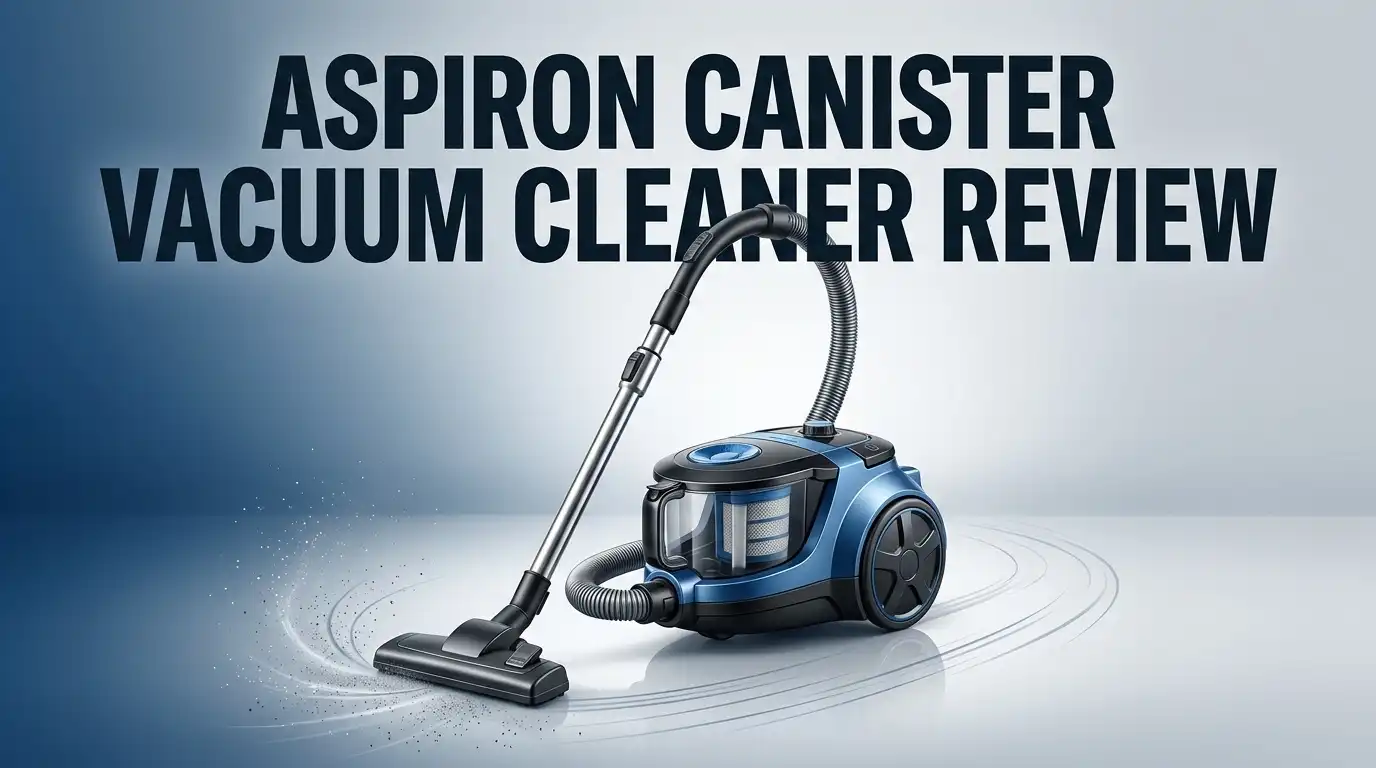
The Aspiron canister vacuum is a corded, bagless cleaner built around a brushless motor rated at 1600W. Aspiron also sells a bagged 1700W version with 45Kpa suction for people who prefer sealed dust disposal.
The core idea is simple. You get a wheeled canister that follows you around, a long telescopic wand, and five attachments that cover floors, upholstery, crevices, and pet hair.
Suction sits above 40Kpa, which is the number Aspiron pushes hardest in its marketing. In plain language, that means it has enough airflow to pull embedded grit out of rug fibers and sand out of car mats.
The dust cup holds 4Qt on the newest model, and older units hold 3.7Qt. That is roughly double what most compact canisters offer, so you empty it far less often.
Power reaches about 20 feet from the cord, and the total cleaning radius stretches to 33 feet with the hose and wand extended. Most people can clean a full floor from one outlet.
The cord rewinds automatically when you tap the pedal. It retracts fast, so keep a hand near the canister the first few times.
Filtration uses cyclone separation, an inlet HEPA filter, and an outlet sponge filter. Both filters wash under a tap and come out without tools.
The whole machine weighs roughly 14 to 15 pounds. It is light enough to carry upstairs with one hand, and stable enough that it does not tip when you yank the hose around a corner.
Unboxing the Aspiron: What Arrives in the Box
The box arrives compact and surprisingly heavy for its size. Aspiron uses recycled cardboard inserts instead of foam, which I appreciated because everything went straight into the recycling bin.
Nothing rattled loose in shipping. The canister body sits in a molded cradle, and the attachments live in a separate tray above it.
Inside the box you get the canister body, the hose, the telescopic metal wand, the floor nozzle, a crevice tool, an upholstery brush, a small dusting brush, and the turbo pet tool. A short user guide sits on top.
Assembly took me under two minutes. The hose pushes into the front port and clicks with a satisfying snap.
Nothing required force, and nothing felt like it might snap off. That matters, because cheap canisters often have parts that jam together and never separate again.
The telescopic wand impressed me immediately. A side latch releases the inner tube, and notched stops lock it at set heights.
The floor nozzle clips onto the wand with the same friction fit. Taller users can extend the wand fully and stand upright without hunching.
First impressions of the plastic are mixed. The finish looks glossy and modern, and the seams line up well.
Still, tap the body and you hear thin plastic. This is a 150 dollar machine, and the material choice reminds you of that.
The wheels roll silently on wood. The rear wheels are large rubber rimmed discs, and a swivel caster underneath lets the canister pivot behind you.
Design, Build Quality, and Everyday Handling
The Aspiron follows the classic canister layout. Motor and dust cup sit low in a wheeled body, and you hold only the lightweight wand.
Your wrist and shoulder feel the difference within five minutes. Upright vacuums push all that weight through your arms, and canisters simply do not.
The canister tracks well behind you. It swings around door frames without flipping, and the rubber wheels leave no marks on hardwood.
Pulling the hose too hard from across a room will still drag the body sideways, especially on tile. A gentle tug works better than a yank.
The power button is oversized and sits on top of the canister. You can tap it with a foot, which saves you from bending down.
Next to it sits the variable suction dial. Turning it down protects curtains, lampshades, and loose rugs from getting inhaled.
Storage is where the design shows its budget roots. The floor head parks in a slot on the back of the canister, and the wand tucks alongside it.
There is no onboard storage for the crevice tool, brushes, or turbo head. You end up keeping those loose in a drawer or a bag, which is annoying.
The carry handle sits on the top of the body and feels sturdy. A second grip on the dust cup helps when you lift it for emptying.
Cord rewind is smooth and complete. No leftover loop dangles out, which is a small detail that cheaper models often get wrong.
Overall the build feels honest. It is not luxurious, but every moving part on my unit still works exactly as it did on day one.
Top 3 Alternatives for Aspiron Canister Vacuum Cleaner


Last update on 2026-08-27 / Affiliate links / Images from Amazon Product Advertising API
Miele Classic C1 Turbo Team Bagged Canister Vacuum

Last update on 2026-08-27 / Affiliate links / Images from Amazon Product Advertising API
Kenmore 600 Series Pet Friendly Bagged Canister Vacuum

Last update on 2026-08-27 / Affiliate links / Images from Amazon Product Advertising API
Eureka Whirlwind Bagless Canister Vacuum NEN110A
Suction Power and Real Cleaning Performance
Numbers on a box mean little until you push a nozzle across a dirty floor. So I tested the Aspiron on four surfaces over several weeks.
On hardwood, this vacuum is excellent. The sealed suction and the squeegee strip on the floor head pull up dust, crumbs, and hair in one pass.
I ran it through a kitchen where a robot vacuum had cleaned two hours earlier. The dust cup still filled with a visible layer of grit.
On low pile carpet and area rugs, performance stays strong. The high suction setting lifted embedded sand from a hallway runner that my old upright had left behind.
On thick plush carpet, the story changes. Without a motorized brush roll, the nozzle relies on airflow alone.
It removes surface debris fine. It does not agitate deep fibers, so ground in pet hair stays put.
Stairs are where I fell in love with it. The canister sits on the floor while the lightweight wand and turbo tool handle each step.
The turbo pet tool uses air to spin its brush bar. It spins faster than I expected and pulled a shocking amount of dander off a fabric armchair.
Car interiors are another win. With the crevice tool and the long hose, I cleaned two seats and a trunk without moving the canister.
Suction is powerful enough to become a nuisance on delicate surfaces. The nozzle will stick to a thin rug or a curtain if you leave the dial at maximum.
Turning the dial down two notches solves it instantly. That variable control is one of the smartest features on the machine.
Filtration, Allergies, and Air Quality
Filtration matters more than most buyers realize. A vacuum with weak sealing simply moves dust from your floor into your air.
The Aspiron uses a three stage approach. Cyclone separation spins heavy debris into the cup, an inlet HEPA filter catches fine particles, and an outlet sponge filter handles the exhaust.
Newer units ship with an H13 grade HEPA filter, while some earlier models used H10. H13 captures a higher percentage of very small particles, so check the listing before you buy.
The body is described as fully sealed. In practice, I noticed no dusty smell from the exhaust, even after vacuuming a room that had been closed for months.
Allergy sufferers in my household reported no sneezing during or after cleaning, which was not true with our previous bagless upright.
Both filters remove without tools. The inlet filter lifts out with the dust cup, and the rear filter sits behind a button release cover.
You can rinse both under cold water. Aspiron recommends drying them completely for 24 hours before reinstalling.
Washing filters saves real money. Bagged competitors need replacement bags and filters every few months, and that cost adds up fast.
There is a tradeoff worth naming. Emptying a bagless cup releases a small puff of dust into the air, no matter how careful you are.
Severe allergy sufferers may prefer the bagged Aspiron model or a bagged Miele. Sealing dust inside a bag and throwing the whole thing away is simply cleaner.
For an average home with pets and normal dust, the bagless version handles filtration well. Just empty it outdoors or over a bin with the lid down.
Attachments and Tools You Actually Use
Aspiron includes five tools, and to my surprise, four of them earned regular use.
The floor nozzle is the workhorse. A toggle on top drops a brush strip for hard floors and retracts it for carpet.
The brush strip makes a noticeable difference on wood. It sweeps fine dust into the airflow instead of pushing it around.
The turbo pet tool is the star attachment. Air pressure spins the internal brush bar, and it grabs pet hair from upholstery and stairs with real force.
It also disassembles completely. Hair wraps around any brush bar eventually, and being able to pop it open and cut the tangle free is genuinely useful.
A latch on the side lets you retract the rubber edge strips. That drops the brush bar closer to the surface, which works well on car mats.
The crevice tool is short but effective. It pulled hair and crumbs from between couch cushions and along baseboards.
I do wish it were a few inches longer. Reaching deep between a sofa arm and a wall takes some stretching.
The dusting brush handles chair spindles, shelves, and vents. Soft bristles mean it does not scratch wood.
The upholstery brush works, but the turbo tool outperforms it on almost every fabric surface. It stayed in the drawer most of the time.
None of these tools store on the vacuum body. That remains the single most frustrating design decision on this machine.
Noise Level and Daily Living With It
Canister vacuums are usually quieter than uprights because the motor sits away from your ears. The Aspiron follows that pattern.
At the lowest suction setting, it produces a low steady hum. You can hold a conversation across the room without shouting.
At maximum suction, it gets loud. Expect a pitch similar to a hair dryer at full power, in the mid 70 decibel range.
Most cleaning happens at medium suction anyway, and that middle setting stays comfortable.
The bagged 1700W model runs slightly louder than the bagless version. More power usually means more noise.
Hose noise is minimal. There is no rattle or whistle, which suggests the seals are tight.
Wheel noise on hardwood is almost nonexistent. On tile grout lines, you hear a faint rumble.
The 20 foot cord plus the hose reach means less unplugging. I cleaned an entire 900 square foot floor from two outlets.
Weight sits around 15 pounds. Carrying it upstairs is easy, though it is not something you want to hold one handed for long.
The vacuum does not stand upright for storage. It lies flat in a closet and takes up about the footprint of a large shoebox.
Startup is instant, with no lag or surge. The variable dial responds immediately when you turn it mid clean.
Emptying the Dust Cup and Maintenance

Last update on 2026-08-27 / Affiliate links / Images from Amazon Product Advertising API
Emptying the Aspiron takes about ten seconds. You press a release, lift the cup by its handle, and hold it over a bin.
The bottom flap swings open with another button. Debris drops out cleanly most of the time.
Fine dust does cling to the cyclone cone, and a quick tap or a wipe with a paper towel handles it.
Deep clean the whole cup every month or so. It rinses under a tap and dries within a day.
The 4Qt capacity means the average home empties it maybe once a week. Households with two dogs will empty it more often.
Filter maintenance is simple. Rinse both filters monthly, dry fully, and reinstall.
Aspiron suggests replacing filters roughly once a year. Replacement sets are inexpensive and widely available.
The turbo brush needs occasional hair removal. Pop the cover, cut the wrapped hair with scissors, and pull it out.
The hose has never clogged for me, but the wide diameter helps. Larger debris passes through instead of jamming.
Anyone who hates buying vacuum bags will love this ownership model. Zero consumables in a normal year, other than eventual filter swaps.
The bagged 1700W version flips that equation. You buy bags, but you never touch the dust.
Both approaches are valid. Pick based on whether you value low running cost or clean disposal.
What the Aspiron Does Not Do Well
Honest reviews name the weaknesses, so here they are plainly.
The floor head has no motorized brush roll. On medium and high pile carpet, it cannot agitate fibers, and deep dirt stays where it is.
If your home is mostly thick carpet, buy a Kenmore or Miele model with a powered head instead.
Tool storage does not exist on the body. Four of your five attachments live somewhere else, and you will lose one eventually.
Plastic quality is average. The machine works well, but it does not feel like something you will hand down to your children.
The crevice tool is too short for deep furniture gaps. A longer flexible version would fix this cheaply.
Suction on maximum can be too aggressive for lightweight rugs and drapes. The dial fixes it, but new owners get startled at first.
The cord rewind pulls fast enough to whip the plug. Guide it with your hand until you learn its speed.
Some owners report hose or attachment fit loosening after a year of heavy use. My unit has not, but it is worth noting.
Customer support responsiveness varies by seller. Buy from the official Aspiron storefront on Amazon to keep warranty claims simple.
Finally, model naming is confusing. Aspiron sells several similar canisters with different wattage, capacity, and filter grades under nearly identical titles.
Read the listing specifications carefully so you get the H13 filter and the 4Qt cup rather than an older variant.
Pros and Cons of the Aspiron Canister Vacuum
Here is the balanced summary in list form.
Pros
- Very strong suction for the price, rated above 40Kpa on bagless models and 45Kpa on the bagged version.
- Variable suction dial gives precise control for rugs, curtains, and delicate surfaces.
- Large 4Qt bagless dust cup means fewer trips to the trash and zero bag costs.
- Sealed system with washable H13 HEPA filtration keeps exhaust air clean for allergy homes.
- Turbo pet tool spins fast and removes pet hair from upholstery and stairs effectively.
- Auto cord rewind with a 20 foot cord and a 33 foot cleaning radius.
- Light body at roughly 15 pounds, easy to carry between floors.
- Telescopic metal wand locks firmly and suits tall users.
- Filters and dust cup remove without tools and rinse under water.
- Excellent value compared to premium canisters costing three times more.
Cons
- No motorized floor brush, so deep pile carpet cleaning is weak.
- No onboard storage for four of the five attachments.
- Plastic construction feels budget grade under close inspection.
- Crevice tool is shorter than most competing versions.
- Emptying the bagless cup releases some dust into the air.
- Maximum suction gets loud and can grab lightweight rugs.
- Confusing model lineup with similar names and different specifications.
- Long term durability is unproven compared to Miele or Sebo.
Who Should Buy the Aspiron Canister Vacuum
This vacuum fits some homes perfectly and disappoints others. Here is how to tell which group you belong to.
Buy it if your home is mostly hard flooring. Wood, tile, laminate, and vinyl are where the Aspiron performs at its best.
Apartment dwellers benefit enormously. It stores small, reaches far on one outlet, and stays quiet at medium power.
Pet owners with short haired animals on hard floors will be very happy. The turbo tool handles furniture and the main nozzle handles the floor.
People with allergies who want sealed HEPA filtration without spending 600 dollars should look here first.
Anyone tired of buying vacuum bags gets real savings. The bagless design costs nothing to run.
Stair heavy homes benefit too. Carrying a 15 pound canister beats dragging a 20 pound upright.
Skip it if your home has wall to wall plush carpet. You need a powered brush roll, and this machine does not have one.
Skip it if you want a machine that lasts twenty years. Premium canisters cost more because their motors and materials are built differently.
Skip it if you cannot tolerate any dust exposure while emptying. Choose the bagged Aspiron or a bagged competitor instead.
Budget shoppers who want maximum suction per dollar have very few better options in 2026.
Price and Value in 2026
Aspiron lists this vacuum around 169 dollars, and street prices often dip near 140 dollars during sales events.
That places it in the crowded budget canister tier, competing directly with Eureka and Bissell.
Against the Eureka Whirlwind, the Aspiron offers far more suction, a larger dust cup, and better filtration. The Eureka is lighter and cheaper.
Against the Kenmore 600 Series, the Aspiron loses on carpet because Kenmore includes a motorized Pet PowerMate head. Kenmore costs roughly double and needs bags.
Against the Miele Classic C1 Turbo Team, the Aspiron loses on build quality, longevity, and filtration certification. Miele costs three times more and needs bags too.
The honest framing is this. You are buying most of the cleaning result for a fraction of the cost, and accepting shorter expected life.
Cost per year matters here. A 150 dollar bagless vacuum that lasts five years with no consumables costs about 30 dollars per year.
A 500 dollar bagged vacuum lasting fifteen years costs about 33 dollars per year plus bags. The math is closer than it looks.
Sale timing helps. Prices drop noticeably during major shopping events, and the purple and blue color variants are often cheapest.
Check whether the listing specifies H13 filtration and a 4Qt cup. Those are the current generation specifications and worth holding out for.
Final Verdict: Is the Aspiron Canister Vacuum Worth It in 2026?
After weeks of daily use, my answer is yes with one clear condition.
The Aspiron canister vacuum is one of the best hard floor cleaners you can buy under 200 dollars. Suction is genuinely strong, filtration is genuinely good, and handling is genuinely comfortable.
It is not a carpet machine. The absence of a motorized brush roll caps its performance on thick pile, and no amount of airflow fixes that.
Everything else about the experience feels better than the price suggests. The latches fit, the wand locks, the cord rewinds, and the dial actually works.
The flaws are real but small. Missing tool storage annoys me daily, and the plastic will never feel premium.
Neither issue affects how clean my floors get. That is the part that matters most.
If you have hardwood, tile, pets, stairs, or allergies, this machine deserves a spot on your shortlist.
If you have deep carpet throughout, spend more on a Kenmore or Miele with a powered head and save yourself the disappointment.
Rating: 4.3 out of 5 for hard floor homes, and roughly 3.2 out of 5 for carpet heavy homes.
For the money, Aspiron built something that punches well above its weight class.
Frequently Asked Questions
Is the Aspiron canister vacuum good for pet hair?
Yes, on hard floors and upholstery. The turbo pet tool spins quickly and lifts hair from fabric, stairs, and car seats effectively. On thick carpet, results drop because the main floor head has no motorized brush.
How much suction does the Aspiron canister vacuum have?
The bagless models produce over 40Kpa of suction. The bagged 1700W version reaches around 45Kpa. Both figures are high for this price range, and a variable dial lets you reduce power for delicate surfaces.
Does the Aspiron vacuum need bags?
The bagless models need no bags at all. You empty a washable 4Qt dust cup instead. Aspiron also sells a bagged 1700W model for buyers who prefer sealed dust disposal, and that version does require bags.
How often should I wash the filters?
Rinse both filters about once a month under cold water. Let them dry completely for 24 hours before reinstalling. Replace the filters roughly once a year, or sooner if suction drops noticeably.
Is the Aspiron canister vacuum loud?
At low and medium suction it stays comfortable and conversational. At maximum suction it becomes loud, similar to a hair dryer. Most cleaning tasks work fine at medium power, which keeps noise reasonable.
Can I use the Aspiron on carpet?
Low pile carpet and area rugs clean well. Medium and high pile carpet clean only at the surface, because the nozzle relies on airflow rather than a spinning brush. Carpet heavy homes should choose a model with a powered head.
How long is the Aspiron power cord?
The cord extends up to 20 feet and rewinds automatically with a pedal tap. Combined with the hose and telescopic wand, total cleaning reach stretches to about 33 feet from the outlet.
Where can I buy replacement filters?
Replacement HEPA and sponge filters are available through Amazon and the official Aspiron website. Confirm your exact model number first, since filter shapes differ slightly between the CA006 and newer generations.

Hi, I’m Rose Callahan, the creator of SpaceSmart.blog.
I review home essentials, gadgets, security tools, kitchen gear, furniture, and cleaning products from Amazon.
My goal is to help you create a smarter, more organized, and comfortable living space.
I test and share practical products that make everyday home life easier and more efficient.
Join me as I explore clever ways to upgrade your home—one smart find at a time.