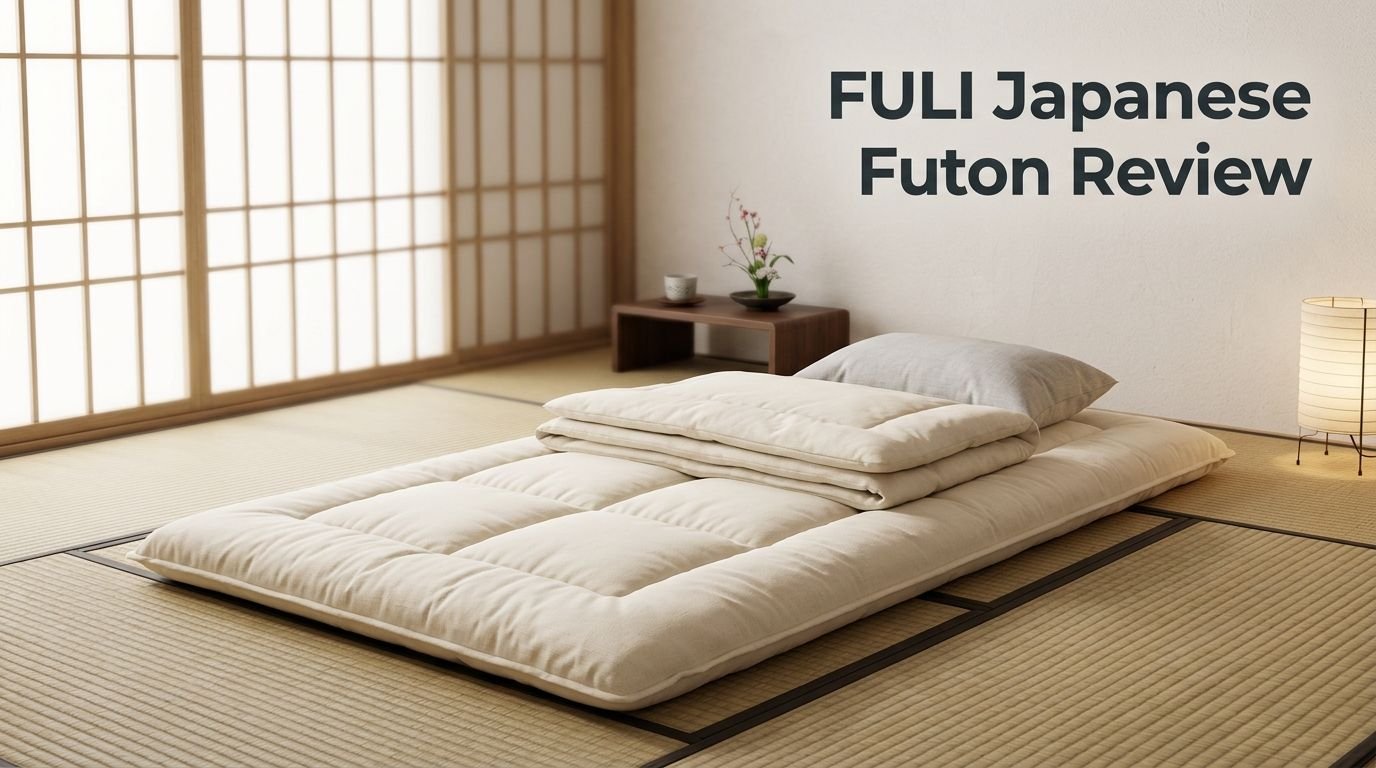
FULI Japanese Futon Review 2026: Worth Your Money?
Are you tired of bulky mattresses eating up your living space? Do you miss the simplicity of sleeping on a firm, grounded surface that supports your back?
The FULI Japanese Futon has been turning heads for years, and in 2026, it continues to rank as one of the most popular floor sleeping solutions on the market.
This traditional shikibuton brings authentic Japanese sleep culture straight to your home. It folds, rolls, and stores away in minutes. It uses 100% cotton fabric with polyester and polyurethane filling.
Key Takeaways:
- The FULI Japanese Futon measures about 2 to 2.5 inches thick and uses a three layer construction of cotton fabric, polyester fill, and polyurethane foam. This makes it lightweight yet supportive enough for floor sleeping.
- It offers medium firm support that works best for back sleepers and lightweight individuals under 150 pounds. The firmness comes from the compressed materials combined with direct floor contact beneath you.
- Portability is a standout feature. The futon folds into a compact shape and weighs around 8 to 13 pounds depending on the size. You can roll it up, store it in a closet, and free up your entire room during the day.
- The cotton cover promotes breathability and moisture wicking. This helps keep the sleeping surface cool and dry. However, floor level sleeping can limit airflow from below.
- Multiple sizes are available, including Twin, Twin XL, Full, Full XL, Queen, and King. Prices range from around $130 for smaller sizes to over $280 for larger options, making it accessible across budgets.
- Side sleepers and heavier individuals may struggle with the thin profile. The limited cushioning can create pressure points at the hips and shoulders. This futon is not a universal fit for every body type.

What Is the FULI Japanese Futon?
The FULI Japanese Futon is a traditional shikibuton style floor mattress. It draws its design from centuries old Japanese sleeping culture. In Japan, families have slept on thin futons placed directly on tatami mats for generations. FULI brings that same concept to a modern audience.
This futon is made by FULI Japan, a brand focused on authentic Japanese bedding products. The company designs its futons to be placed on flat surfaces like tatami, hardwood floors, or even slatted bed frames. The core idea is simple. Sleep close to the ground on a firm surface that keeps your spine aligned.
The FULI futon uses 100% cotton for its outer fabric. The stuffing combines 100% polyester with a polyurethane foam blend. This layered structure gives it a medium firm feel. It is not a plush mattress. It is a minimalist sleep surface that relies on the floor for much of its support.
Diamond shaped quilting holds the layers in place. This prevents the fill from shifting during sleep. The quilted pattern also adds a subtle cushioned texture to the surface. You get a clean, uniform feel across the entire sleeping area.
FULI sells this futon in white as its standard color. It comes in multiple sizes from Twin all the way to King. Each size ships rolled and compressed for easy delivery.
Construction and Materials Breakdown
The FULI Japanese Futon uses a three layer construction. Each layer serves a specific purpose in how the futon performs on the floor.
The top layer is 100% cotton fabric. This is the surface you sleep on. Cotton breathes well and wicks moisture away from your body. It feels smooth against the skin and stays relatively cool during warm nights. Cotton also softens with use over time, improving comfort gradually.
The middle layer is polyester fill. This padding provides the initial cushioning you feel when you lie down. It distributes your body weight across the surface. Polyester fill is lightweight, which helps keep the futon easy to move and fold. However, polyester can compress over months of regular use, reducing the overall loft.
The base layer uses a polyurethane foam blend. This is the support core. It prevents you from bottoming out against the hard floor. The foam maintains structural shape and gives the futon its medium firm rating. This layer is thin but dense enough to resist full compression under moderate body weight.
The diamond quilted stitching runs across the entire surface. It locks all three layers together. This prevents bunching, shifting, or uneven spots from forming. The quilting also adds a slight pillow top effect that softens the feel without adding bulk.
The entire futon measures about 2 to 2.5 inches thick when laid flat. This is intentionally thin. Traditional shikibutons are not meant to replace thick mattresses. They work with the floor beneath them to create a firm, flat sleeping plane.
Firmness and Comfort Level
The FULI Japanese Futon sits at a medium firm comfort level. On a standard 1 to 10 firmness scale, most users place it around a 7 out of 10. This means it is noticeably firm but not rock hard.
The firmness comes from two sources. First, the compressed polyester and foam layers resist deep sinkage. Second, the floor itself acts as the ultimate support base. Together, these create a sleeping surface that barely gives under your body weight.
Back sleepers often find this firmness ideal. The flat surface keeps the spine in a neutral position. There is little to no sinkage at the hips or shoulders. This reduces the chance of waking up with lower back pain caused by sagging mattresses.
Side sleepers may find it too firm. The thin profile does not offer enough cushioning for bony areas like hips and shoulders. Without adequate pressure relief, side sleeping on this futon can cause discomfort, especially during the first few weeks.
The quilted cotton surface adds a soft texture that takes the edge off the firmness. It is a small but welcome detail. You do not feel like you are lying on a bare floor. There is a thin buffer that makes the experience more pleasant.
Keep in mind that firmness perception changes with body weight. Lighter sleepers under 150 pounds will feel more of the surface cushioning. Heavier sleepers over 200 pounds may compress through the layers and feel the floor directly underneath.
Top 3 Alternatives for FULI Japanese Futon
If the FULI Japanese Futon does not match your needs, here are three solid alternatives worth checking out.
1. MAXYOYO Japanese Floor Mattress Futon Mattress

This 4 inch thick floor mattress offers more cushioning than the FULI. It works well for side sleepers and heavier individuals who need extra padding.
2. EMOOR Japanese Futon Mattress CLASSE

Made in Japan by skilled futon craftsmen, the EMOOR CLASSE is a premium pick. It uses carefully selected materials and delivers authentic shikibuton quality.
3. D&D Futon Furniture Traditional Japanese Floor Futon Mattress

This USA made option is 3 inches thick and filled with cotton, fiber, and a foam layer. It provides a good balance of firmness and affordability.
Sleep Performance for Different Positions
The FULI Japanese Futon does not perform equally for every sleep position. Your preferred sleeping style has a big impact on how this futon feels.
Back sleepers get the best experience. The flat, firm surface keeps the spine aligned from head to hips. There is minimal sinkage, so the lumbar area stays supported. Many back sleepers report reduced morning stiffness after switching to this futon from a soft mattress.
Stomach sleepers can also benefit. The firm base prevents the pelvis from sinking too deep. This keeps the spine straighter and reduces lower back strain. However, stomach sleepers may feel pressure on the chest area due to the firmness level.
Side sleepers face the biggest challenge. The 2 to 2.5 inch thickness cannot cushion protruding joints properly. Hips and shoulders press hard against the surface, creating pressure points. Side sleepers who want to try this futon should consider adding a thin mattress topper for extra relief.
Combination sleepers who switch positions throughout the night will have a mixed experience. The futon handles transitions well because the flat surface does not trap you in any position. But comfort will vary as you move between back and side lying.
For anyone new to floor sleeping, expect an adjustment period of one to two weeks. Your body needs time to adapt to a firmer, lower surface. Most users report improved comfort after this initial break in phase.
Size Options and Pricing
FULI offers this futon in six different sizes to fit a range of rooms and sleepers.
The Twin size measures approximately 39 by 80 inches. It suits single sleepers, kids, or guest setups. The Twin XL adds extra length at 39 by 83 inches, making it a better fit for taller individuals.
The Full size comes in at 54 by 75 inches. This gives single sleepers more room to spread out. The Full XL stretches to 54 by 83 inches for those who want both width and length.
The Queen size measures 60 by 80 inches. It works for couples who prefer close sleeping or single sleepers who want maximum space. The King size at 72 by 80 inches is the largest option and suits couples or families.
Pricing varies by size. Twin sizes start around $129 to $150. Full sizes sit in the $200 to $250 range. Queen and King sizes can go from $250 to $350 or more depending on sales and availability.
Compared to traditional mattresses that cost hundreds or thousands of dollars, the FULI futon is a budget friendly option. You get authentic Japanese style sleeping without a major financial commitment.
Portability and Storage
One of the strongest selling points of the FULI Japanese Futon is its portability. This futon was designed to be moved, folded, and stored daily. That is how traditional futons are used in Japan.
The futon weighs between 8 and 13 pounds depending on the size. Even the King size stays light enough for one person to carry. You can roll it up or fold it into thirds for compact storage.
Storing the futon frees up your entire room. This is a game changer for small apartments, studio living, or multi purpose rooms. During the day, your bedroom becomes a living space, home office, or workout area.
FULI includes storage straps with the futon. These keep it tightly rolled when not in use. You can slide it into a closet, stand it in a corner, or tuck it behind furniture. Some users also purchase a separate futon storage bag for added protection.
Travel is another practical use case. The rolled futon fits in a car trunk easily. You can bring it to camping trips, family gatherings, or overnight stays. It provides a familiar sleep surface no matter where you go.
The only storage tip to remember is regular airing. Japanese tradition calls for placing the futon in sunlight periodically. This prevents moisture buildup and keeps the cotton cover fresh.
Breathability and Temperature Regulation
The FULI Japanese Futon handles temperature well for a floor level sleeping surface. Its cotton cover is the primary driver of breathability. Cotton allows air to pass through the fabric and wicks sweat away from the skin.
The polyester fill also permits some vapor passage through its fibers. This means heat does not get trapped inside the futon as easily as it would in memory foam mattresses. You get a neutral sleeping temperature for most of the year.
However, the polyurethane foam base can retain some warmth. Dense foam naturally holds heat, and this layer sits closest to the floor. On warm nights, you may notice a slight increase in temperature around the lower body.
Floor level sleeping affects airflow. Since the futon sits directly on the ground, there is no air circulation from underneath. Elevated beds benefit from ventilation below the mattress. The FULI futon does not have this advantage.
To improve breathability, many users place the futon on a tatami mat or slatted surface. This creates a small gap for air to flow beneath the futon. It also prevents moisture from collecting between the futon and the floor.
Hot sleepers should pair this futon with breathable sheets and a cool pillow. These small additions make a noticeable difference in temperature comfort throughout the night.
Durability and Long Term Performance

The FULI Japanese Futon is built for daily folding and unfolding. Its materials are chosen to handle this repeated use. But durability depends on how you maintain it and how much weight it supports nightly.
The cotton cover holds up well against regular handling. It resists pilling and maintains a smooth surface through months of use. Abrasion from rough floors can cause wear, so placing a sheet or protective pad underneath helps preserve it.
The polyester fill compresses gradually over time. After several months of nightly use, you may notice the futon getting thinner in areas where your body applies the most pressure. Rotating the futon head to foot every few weeks helps distribute wear evenly.
The polyurethane foam core maintains its density longer than the polyester fill. It provides consistent base support for a good stretch of time. However, exposure to moisture can degrade foam quality, so keeping the futon dry is essential.
Heavier sleepers will see faster compression. Individuals over 200 pounds put more stress on the thin layers, leading to quicker breakdown. Lighter sleepers under 150 pounds can expect the futon to last significantly longer.
Most users report a functional lifespan of one to three years with daily use. For occasional guest use, the futon can last much longer. Proper airing, rotation, and protection extend its useful life.
Ease of Setup and Maintenance
Setting up the FULI Japanese Futon takes less than two minutes. You unroll it on a flat surface, smooth out any wrinkles, and it is ready for sleep. There are no frames to assemble, no springs to align, and no tools required.
Maintenance is straightforward. FULI recommends using a sheet or cover to protect the cotton surface. This reduces staining and extends the life of the fabric. Spot cleaning works for small spills. The futon itself is not machine washable due to its foam core.
Airing out the futon is the most important care step. Japanese tradition involves hanging or laying the futon in direct sunlight regularly. This kills bacteria, removes moisture, and prevents musty odors. If you do not have outdoor space, placing it near a window on a sunny day works too.
Light beating or patting the futon removes dust and fluffs up the fill. This is another traditional practice that keeps the surface even and comfortable. A gentle vacuum on low suction can also remove debris from the quilted surface.
For floor care, wipe down the sleeping area before laying the futon each night. Dust and debris on the floor can work into the fabric over time. A clean surface underneath protects both the futon and your sleep hygiene.
Who Should Buy the FULI Japanese Futon?
The FULI Japanese Futon fits certain lifestyles and body types better than others. Here is who will get the most value from this product.
Minimalists and small space dwellers will love this futon. If you live in a studio apartment, dorm room, or tiny home, the ability to fold and store your bed daily is a huge advantage. Your floor space becomes fully usable during waking hours.
Back sleepers who prefer firm surfaces are ideal candidates. The flat, grounded sleeping plane supports neutral spine alignment. If you have always felt that regular mattresses are too soft, this futon might be exactly what you need.
Budget conscious shoppers will appreciate the price point. You can get an authentic Japanese futon for a fraction of what a traditional mattress costs. No bed frame is needed either, saving you even more money.
Guest room setups benefit from this futon’s portability. Keep it stored in a closet and pull it out when visitors arrive. It provides a comfortable temporary sleep surface without dedicating an entire room to a permanent bed.
People interested in Japanese culture and traditional living will enjoy the authentic experience. Sleeping on a shikibuton connects you to a practice that has supported healthy sleep in Japan for centuries.
Who Should Avoid the FULI Japanese Futon?
This futon is not the right fit for everyone. Some sleepers should look at other options.
Side sleepers who need pressure relief will struggle with the thin profile. The 2 to 2.5 inch thickness cannot cushion hips and shoulders enough. Prolonged side sleeping on this surface can cause joint pain and restless nights.
Heavier individuals over 200 pounds may bottom out. The thin layers compress fully under greater body weight, leaving you essentially sleeping on the floor. This eliminates the cushioning benefit of the futon entirely.
People with chronic back or joint conditions should consult a doctor before switching to floor sleeping. While some users report back pain improvement, others find that the firm surface aggravates existing issues.
Hot sleepers in warm climates might find floor level sleeping too warm. The lack of under mattress airflow combined with body heat against the ground can create an uncomfortable sleeping temperature.
Anyone expecting a plush mattress feel will be disappointed. This is a thin, firm, minimalist sleep surface. It is fundamentally different from a traditional Western mattress. Set your expectations accordingly.
Real User Feedback and Common Opinions
User reviews for the FULI Japanese Futon paint a mostly positive picture with some consistent criticisms. Here is what real buyers say.
Many users praise the back pain relief they experience. Several reviewers mention sleeping without pain for the first time in years. The firm support and flat surface help keep the spine properly aligned, and users frequently highlight this benefit.
Comfort after the adjustment period gets strong marks. Most buyers admit the first week feels unusual. But after their body adapts, they describe the futon as surprisingly comfortable. Some even prefer it over their previous mattresses.
Quality of materials receives positive feedback. Buyers appreciate the cotton cover’s softness and the clean, simple look. The diamond quilted stitching looks premium and feels consistent across the surface.
Compression over time is the most common complaint. Several long term users report the futon getting noticeably thinner after six months of daily use. This is especially true for heavier individuals who apply more pressure nightly.
Side sleepers frequently mention discomfort. The lack of cushioning at pressure points is a recurring theme. Many side sleepers add a mattress topper or switch to back sleeping to resolve this issue.
Value for money is generally viewed as fair. Most buyers feel the futon delivers on its promises at a reasonable price. The authentic Japanese design and practical portability add to the perceived value.
How to Get the Best Experience with Your FULI Futon
A few simple habits can dramatically improve your experience with the FULI Japanese Futon.
Use a tatami mat underneath. Tatami provides a slightly cushioned, breathable base that enhances both comfort and airflow. FULI sells tatami mats specifically designed to pair with their futons. This combination is closest to the authentic Japanese setup.
Add a thin mattress topper if you find the futon too firm. A 1 to 2 inch topper in memory foam or cotton batting softens the surface without ruining the minimalist design. This simple addition can make the futon work for side sleepers too.
Rotate the futon regularly. Flip it head to foot every two weeks. This distributes body compression evenly and prevents permanent indentations from forming in one spot.
Air it out in sunlight at least once a week. Sunlight naturally sanitizes the cotton surface and removes trapped moisture. This practice keeps your futon fresh, dry, and odor free.
Invest in a quality fitted sheet made for futon dimensions. Standard bed sheets may not fit the thinner profile properly. FULI offers sheets cut specifically for their futon sizes, ensuring a snug fit that stays in place.
Keep the floor clean before laying down the futon each night. A quick sweep or vacuum prevents debris from working into the fabric and affecting the sleeping surface over time.
Frequently Asked Questions
Is the FULI Japanese Futon good for back pain?
Many users report reduced back pain after sleeping on the FULI futon. The firm, flat surface promotes neutral spinal alignment, especially for back sleepers. However, results vary by individual. People with chronic back conditions should consult a healthcare provider before switching to floor sleeping.
Can you use the FULI futon on a bed frame?
Yes, you can place the FULI futon on a slatted bed frame without gaps. The slats should be close enough together to prevent the thin futon from sagging between them. Flat platform frames also work well. This gives you some elevation while keeping the firm sleeping feel.
How long does the FULI Japanese Futon last?
With daily use, most users get one to three years of comfortable performance. The polyester fill compresses over time, reducing thickness and cushioning. For occasional guest use, the futon lasts significantly longer. Regular rotation and proper airing extend its lifespan.
Is the FULI futon comfortable for side sleepers?
Side sleepers often find the futon too firm for comfortable sleep. The thin profile does not cushion hips and shoulders enough. Adding a 1 to 2 inch mattress topper can help. If you are primarily a side sleeper, consider a thicker alternative like the MAXYOYO floor mattress.
How do you clean the FULI Japanese Futon?
The FULI futon is not machine washable due to its foam core. Use a fitted sheet to protect the surface. Spot clean stains with a damp cloth and mild detergent. Air the futon in sunlight regularly to remove moisture, odors, and bacteria. Light vacuuming removes surface dust.
Does the FULI futon smell when new?
Some users notice a mild odor when first unrolling the futon. This is common with new foam products. The smell typically dissipates within 24 to 48 hours. Airing it out in a well ventilated room or in direct sunlight speeds up the process.
What size FULI futon should I buy?
Choose based on your room size and sleeping needs. Twin works for single sleepers and kids. Full gives one person more room. Queen suits couples who sleep close together or single sleepers who want extra space. King is best for couples who need full freedom of movement.