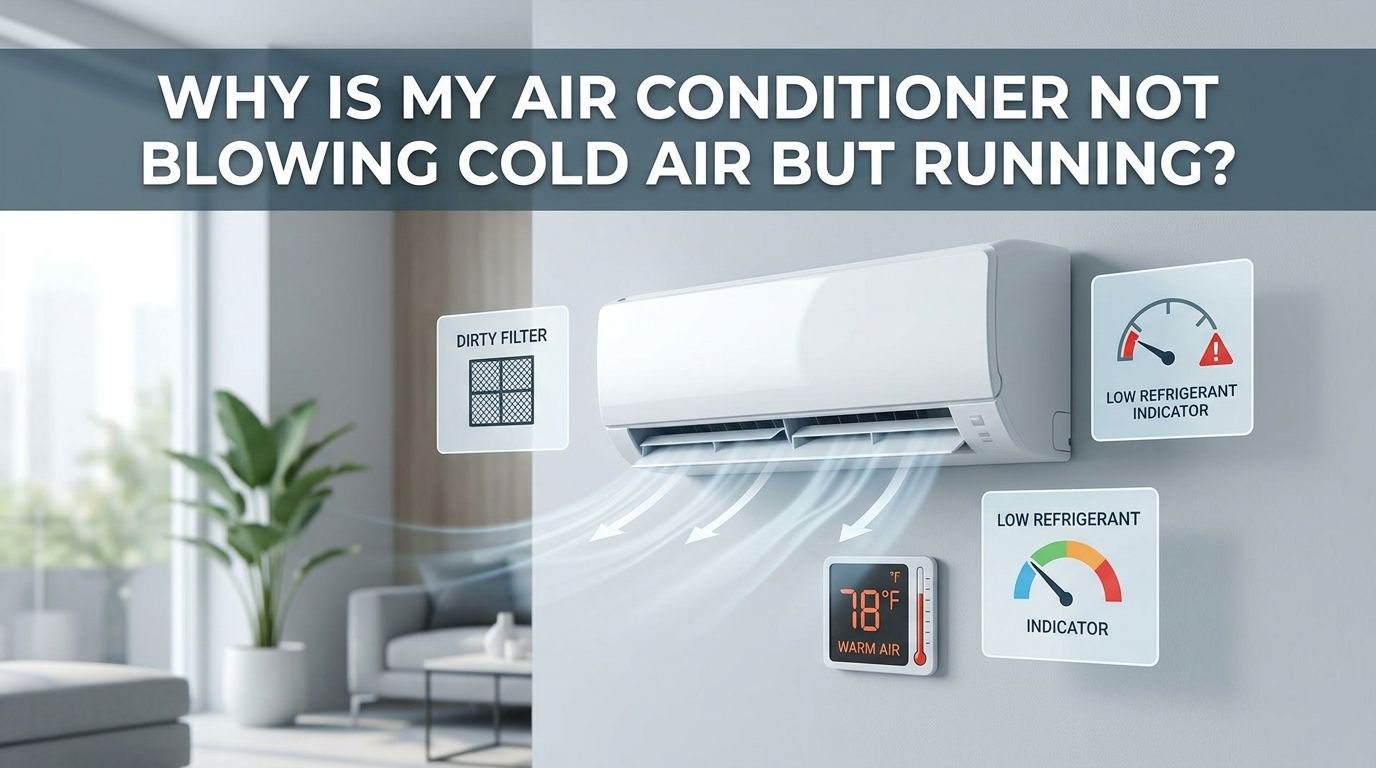
Why Is My Air Conditioner Not Blowing Cold Air but Running?
You walk into your home on a hot day, and the air conditioner is humming away. The fan is spinning. The system sounds like it should be working. But the air coming from your vents is warm or barely cool. This is one of the most frustrating HVAC problems homeowners face.
The good news? Most causes behind an air conditioner running but not cooling are fixable. Some you can solve yourself in minutes. Others may need a professional, but at least you will know exactly what to tell them.
This guide covers every major reason your AC might be blowing warm air while still running. You will find clear, step by step fixes for each cause. Whether you own a central air system, a window unit, or a mini split, these solutions apply to you. Let’s get your cool air back.
In a Nutshell
- A dirty air filter is the most common and easiest fix. A clogged filter blocks airflow and forces the system to work harder without producing cold air. Check it first before doing anything else.
- Wrong thermostat settings can trick you into thinking something is broken. If the fan is set to “ON” instead of “AUTO,” the blower will run even when the cooling cycle is off, pushing warm air through your vents.
- Low refrigerant signals a leak, not just a recharge need. Refrigerant does not get “used up.” If levels are low, there is a leak somewhere in the system, and a licensed technician must find and fix it.
- Frozen evaporator coils can shut down your cooling completely. Ice buildup on the indoor coil prevents the system from absorbing heat. Turn the AC off and let it thaw before restarting.
- A failing compressor is the most expensive issue on this list. The compressor is the heart of the system. If it stops working, the refrigerant cannot circulate, and no cooling happens. Replacement costs range from $1,500 to $3,000 or more.
- Regular maintenance prevents most of these problems. Changing filters monthly, keeping the outdoor unit clean, and scheduling annual tune ups will keep your AC running cold for years.
Check Your Thermostat Settings First
The simplest fix is often the right one. Your thermostat may be set incorrectly. If the fan switch is on “ON” instead of “AUTO,” the blower motor runs continuously. It pushes air through the ducts even between cooling cycles. That air will feel warm or room temperature.
Switch the fan setting to “AUTO” so it only runs during active cooling. Also confirm the thermostat is set to “COOL” mode and the temperature is set at least 3 to 5 degrees below the current room temperature.
If you have a programmable or smart thermostat, check that no one changed the schedule. Dead batteries in a thermostat can also cause erratic behavior, so replace them if needed.
Pros: Free fix, takes under one minute, requires no tools.
Cons: Only works if the thermostat was the actual problem. Does not help with mechanical failures.
Replace a Dirty or Clogged Air Filter
A clogged air filter is the number one reason an AC runs but does not blow cold air. The filter traps dust, pet hair, and debris. Over time, it becomes so packed that airflow drops dramatically.
When airflow drops, the evaporator coil cannot absorb enough heat. The coil may even freeze, which blocks cooling entirely. Check your filter every 30 days and replace it every 60 to 90 days at minimum.
To replace it, turn off the system. Slide the old filter out from the return air vent or indoor air handler. Insert a new filter with the airflow arrow pointing in the correct direction. Turn the system back on.
Pros: Costs only $5 to $20 for a new filter. Restores airflow quickly. Prevents bigger problems down the line.
Cons: Reusable filters require washing and drying time. Some homeowners forget to check filters regularly.
Inspect the Outdoor Condenser Unit
Your outdoor unit releases heat from inside your home into the outside air. If it is blocked, the system cannot expel heat efficiently. Leaves, grass clippings, dirt, and debris often collect around and inside the condenser.
Walk outside and look at the unit. Make sure there is at least two feet of clearance on all sides. Remove any visible debris from the fins. Use a garden hose to gently spray the fins from the inside out.
Also check that the condenser fan is spinning. If the fan is not moving while the system is running, you may have a bad fan motor or capacitor. Both require professional repair.
Pros: Cleaning the condenser is free and takes about 15 minutes. Improved heat transfer boosts cooling immediately.
Cons: You may damage the delicate aluminum fins if you use high water pressure. Fan motor issues need a technician.
Look for Frozen Evaporator Coils
Frozen evaporator coils are a very common problem. When the coil freezes, ice blocks the air from passing through. Your AC runs, but only warm or slightly cool air reaches your vents.
Signs of a frozen coil include visible ice on the indoor unit, water pooling around the air handler, or reduced airflow from vents. The main causes are restricted airflow from dirty filters, low refrigerant, or a malfunctioning blower fan.
To fix it, turn the AC off immediately. Switch the thermostat fan to “ON” so the blower pushes warm air over the coils and melts the ice. Wait several hours until all ice is gone. Then check your filter and restart the system.
Pros: Letting the coil thaw is free and usually solves the immediate issue. Running the fan speeds up the process.
Cons: Thawing can take 2 to 24 hours. If the root cause is low refrigerant, the coil will freeze again without professional repair.
Check for Low Refrigerant or a Refrigerant Leak
Refrigerant is the chemical compound that absorbs heat from your indoor air and releases it outside. Your AC system does not consume refrigerant. If levels are low, it means there is a leak somewhere in the lines, coils, or connections.
Signs of low refrigerant include warm air from vents, ice on the refrigerant line, a hissing or bubbling sound near the indoor unit, and higher than normal electricity bills. You may also notice the system running for long stretches without reaching the set temperature.
Only a licensed HVAC technician should handle refrigerant. They will use gauges to check the charge, locate the leak, repair it, and recharge the system. Do not attempt to add refrigerant yourself. It requires EPA certification and specialized equipment.
Pros: A proper repair restores full cooling performance. Fixing the leak prevents future losses.
Cons: Leak detection and repair can cost $200 to $1,500 depending on the location. Refrigerant recharge adds to the total bill.
Clean the Evaporator Coil
Even if your evaporator coil is not frozen, it can still cause problems when dirty. A layer of dust and grime on the coil acts as insulation. It prevents the refrigerant inside from absorbing heat effectively.
To access the evaporator coil, turn off the system. Open the access panel on the indoor air handler. You will see the A shaped or slab shaped coil. Use a soft brush to remove loose dust. Then apply a no rinse evaporator coil cleaner spray and let it drip into the drain pan.
Clean the coil once a year for best results. This is a task many homeowners can do, but if you are uncomfortable opening your air handler, call a technician.
Pros: Restores cooling efficiency. A can of coil cleaner costs under $15. Helps reduce energy bills.
Cons: Accessing the coil can be tricky in some systems. Heavy buildup may require professional deep cleaning.
Make Sure Your Vents and Ductwork Are Open
Closed or blocked vents can reduce airflow enough to cause cooling problems. Furniture, rugs, and curtains sometimes cover supply or return vents without the homeowner noticing.
Walk through every room and confirm all supply vents are open and unobstructed. Check that return air grilles are clear too. Blocked returns force the system to starve for air, which leads to the same problems as a dirty filter.
Ductwork can also develop leaks, gaps, or disconnected joints over time. Conditioned air escapes into your attic or crawl space instead of reaching your rooms. The Department of Energy estimates that duct leaks can waste 20% to 30% of your cooling output.
Pros: Opening blocked vents is instant and free. Duct sealing significantly improves efficiency.
Cons: Duct inspections and sealing require a professional and can cost $300 to $700.
Test the Capacitor and Compressor
The compressor is the component that circulates refrigerant through the system. It sits inside the outdoor unit. If the compressor fails, your AC will blow only warm air. You may hear a humming or clicking sound from the outdoor unit without the compressor engaging.
A common related issue is a bad run capacitor or start capacitor. The capacitor provides the electrical boost the compressor and fan motors need to start. A failed capacitor will prevent the compressor from turning on.
Signs of a failing compressor include the outdoor unit vibrating without cooling, the circuit breaker tripping repeatedly, and warm air from all vents. A technician can test the capacitor with a multimeter and check the compressor’s electrical windings.
Pros: Replacing a capacitor is relatively cheap at $150 to $400 including labor. It often solves the problem.
Cons: Compressor replacement is expensive, ranging from $1,500 to $3,000. In older units, full system replacement may be more cost effective.
Examine the Circuit Breaker
Your AC system has two main components: the indoor air handler and the outdoor condenser unit. Each one is usually on a separate circuit breaker. If the outdoor unit’s breaker trips, the indoor fan will still run, but no cooling happens.
Go to your electrical panel and look for breakers labeled “AC,” “Condenser,” or “Compressor.” If any are in the tripped (middle) position, flip them fully to OFF, then back to ON. Wait a few minutes for the outdoor unit to restart.
If the breaker trips again immediately or within a short time, do not keep resetting it. A repeatedly tripping breaker indicates a serious electrical issue such as a short circuit, a grounded compressor, or an overloaded circuit. Call an electrician or HVAC technician.
Pros: Resetting a tripped breaker takes seconds and costs nothing. It often explains the mystery of a running fan with no cold air.
Cons: A breaker that keeps tripping points to a deeper and more costly electrical problem.
Evaluate the Age of Your AC System
Most central air conditioners last 15 to 20 years with proper maintenance. As units age, they lose efficiency and become more prone to breakdowns. Components wear out, refrigerant leaks develop, and repair costs stack up.
If your AC is older than 10 years and requires frequent repairs, it may be time to consider replacement. Modern systems use R 410A refrigerant and meet higher SEER2 efficiency ratings. A newer unit will cool your home faster and lower your monthly energy bills.
Calculate the cost of your recent repairs. If the total exceeds 50% of the cost of a new system, replacement is usually the smarter financial choice. Your technician can help you compare repair vs. replacement costs.
Pros: A new system provides reliable, efficient cooling for years. Modern units are quieter and more energy efficient.
Cons: Replacement costs range from $3,500 to $8,000 or more depending on size and brand.
Schedule Professional Maintenance Annually
Prevention beats repair every time. An annual AC tune up catches small problems before they turn into expensive failures. During a maintenance visit, a technician checks refrigerant levels, cleans coils, tests electrical connections, and inspects all moving parts.
The best time to schedule maintenance is in spring, before the cooling season starts. This ensures your system is ready to handle peak summer demand. Many HVAC companies offer maintenance plans that include priority service and discounts on repairs.
Between professional visits, you can help by changing filters regularly, keeping the outdoor unit clean, and monitoring your system’s performance. If you notice a gradual decline in cooling, do not ignore it. Early action saves money and prevents uncomfortable breakdowns.
Pros: Annual tune ups extend the life of your system. They reduce energy bills by keeping the system at peak efficiency.
Cons: A tune up costs $80 to $200 per visit. Some homeowners skip it and end up paying far more in emergency repairs.
When to Call a Professional
You can handle some AC issues yourself. Changing filters, opening vents, cleaning the outdoor unit, and checking the thermostat are safe, easy tasks. But several problems require trained hands and specialized tools.
Call a professional if you suspect a refrigerant leak, hear unusual noises from the compressor, see ice that keeps returning after thawing, or experience a breaker that keeps tripping. Electrical components inside your AC carry dangerous voltages. Working on them without training risks injury and further damage to the system.
When choosing a technician, verify they hold proper HVAC licensing and EPA certification. Ask for a written estimate before any work begins. Get a second opinion if the first quote seems unusually high.
Pros: Professionals diagnose problems accurately and fix them safely. Warranties on parts and labor protect your investment.
Cons: Service calls typically cost $75 to $200 just for the visit, plus parts and labor for repairs.
Frequently Asked Questions
Why is my AC running but blowing warm air?
The most common causes are a dirty air filter, wrong thermostat settings, low refrigerant, frozen evaporator coils, or a failing compressor. Start by checking your filter and thermostat. If those are fine, inspect the outdoor unit and look for ice on the indoor coil. Persistent warm air usually means you need a professional to check refrigerant levels and electrical components.
Can a dirty filter cause my AC to stop cooling?
Yes. A heavily clogged filter restricts airflow so much that the evaporator coil cannot absorb heat properly. This leads to warm air from vents and can even cause the coil to freeze. Replacing the filter is one of the fastest and cheapest fixes. Check it monthly and replace it every one to three months.
How do I know if my AC is low on refrigerant?
Common signs include warm air from vents, ice forming on the refrigerant line or indoor coil, a hissing or bubbling sound near the air handler, and the system running constantly without reaching the set temperature. Only a licensed technician can accurately measure and recharge refrigerant levels.
How much does it cost to fix an AC that is not cooling?
Costs vary widely. A new air filter costs $5 to $20. A capacitor replacement runs $150 to $400. Refrigerant leak repair ranges from $200 to $1,500. Compressor replacement can cost $1,500 to $3,000 or more. Annual maintenance at $80 to $200 per visit helps you avoid many of these expenses.
Should I replace my AC or repair it?
Consider replacement if your unit is over 15 years old, uses outdated R 22 refrigerant, or if repair costs exceed 50% of the price of a new system. A new air conditioner offers better efficiency, lower energy bills, and reliable performance. For newer systems with minor issues, repair is almost always the better choice.
Is it safe to run my AC if it is not blowing cold air?
Running the system briefly to diagnose the problem is fine. However, do not run it continuously if the evaporator coil is frozen or the compressor sounds abnormal. Doing so can cause further damage. Turn the system off, investigate the cause, and fix the issue before running it again.

Hi, I’m Rose Callahan, the creator of SpaceSmart.blog.
I review home essentials, gadgets, security tools, kitchen gear, furniture, and cleaning products from Amazon.
My goal is to help you create a smarter, more organized, and comfortable living space.
I test and share practical products that make everyday home life easier and more efficient.
Join me as I explore clever ways to upgrade your home—one smart find at a time.