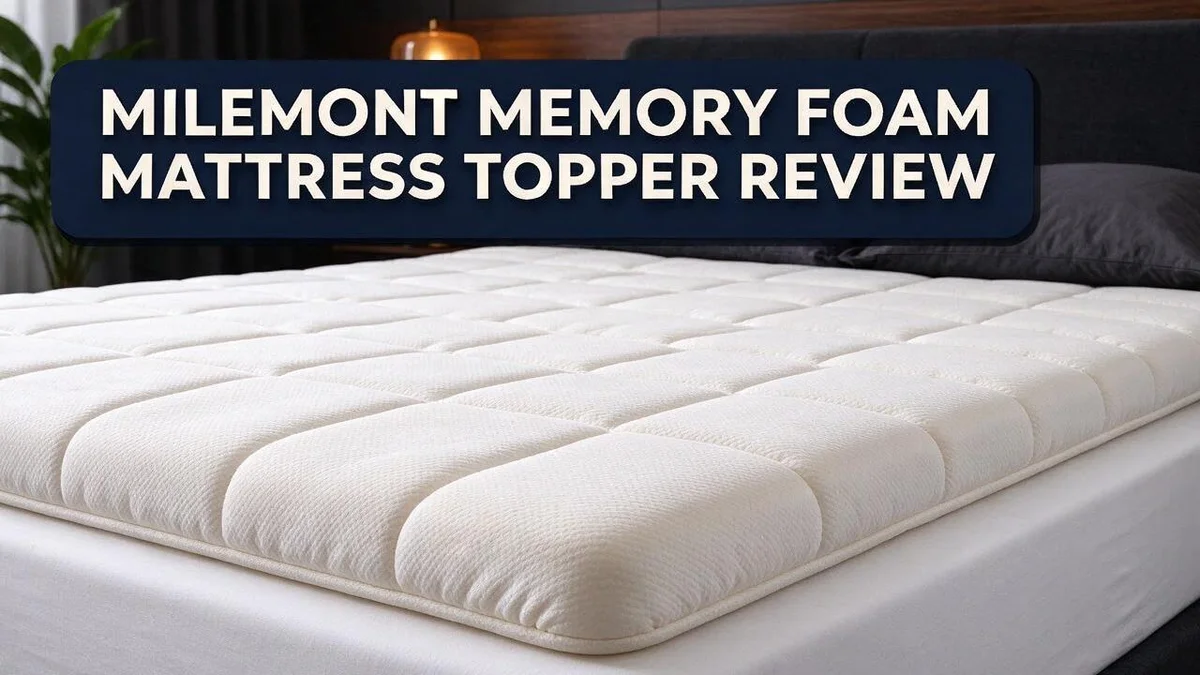
Milemont Memory Foam Mattress Topper Review 2026
Tired of waking up with a sore back? You are not alone. A memory foam mattress topper can change how your bed feels overnight. It adds a soft layer that molds to your body.
Milemont makes memory foam toppers in three thickness options. You can pick 1.5″, 2″, or 3″ depending on how much cushion you want. The 1.5″ queen model measures 79″ long and 59″ wide, so it fits a standard queen bed.
Choosing the right topper can feel confusing. Thickness, size, and comfort all matter. In this review, we explain what the Milemont topper offers and who it suits best. We also look at how it fits into your sleep routine.
Ready to see if this topper fits your bed? Keep reading for a clear look at the details.
In a Nutshell
-
Measure before you buy. The 1.5 inch queen model measures 79 by 59 inches. Compare those numbers with your mattress so the topper fits neatly. Write down your bed size before shopping.
-
Thin layers feel gentle. A 1.5 inch topper adds light cushion. Thicker options feel plusher and can add more support for many sleepers.
-
Thicker toppers raise the bed. Extra height changes how the bed looks and feels. Check that your sheets and bedding still fit well.
-
Think about your sleep style. Side sleepers often want a softer surface for pressure relief. Back and stomach sleepers may prefer a firmer feel. Pick the option that matches your comfort needs.
-
Read recent feedback carefully. Independent reviews for this brand are limited. Look for detailed buyer comments that mention comfort over several weeks. Pay attention to comments about heat, sagging, and durability.
-
Give it time at home. Memory foam often needs a few nights to adjust to body heat. Test the topper for at least two weeks before you decide.
Build and Materials
The build of a memory foam topper shapes how it feels every night. Good materials matter just as much as thickness.
Foam density is a key detail. Denser foam usually lasts longer and holds its shape. Lighter foam can feel soft at first but may sag over time.
Look for density on the product page before you order. This number gives you a sense of how much support the foam offers.
The cover fabric plays a role too. A soft cover feels smooth against your skin. A removable cover also makes cleaning easier.
Check whether the cover zips off and what the care label says. Following those steps keeps the topper fresh for longer.
Think about how the topper stays put. Smooth sheets can let a topper slide. Corner straps or a fitted design help hold it in place.
Heat control is worth a look. Memory foam can trap body heat during the night. Breathable covers and airflow designs may help you stay cool.
Some toppers include vents or open cell foam to move air through the layers. Look for these features in the product details.
Care keeps the topper in shape. Keep it flat and dry. Use a mattress protector to guard against spills and dust.
Rotating the topper, if the maker recommends it, can spread out wear. Always follow the care tips in the manual.
Foam odor is another point to consider. New memory foam can smell strong when it arrives. Airing it out in a well ventilated room for a day or two usually helps.
Most smells fade with time. If the odor lingers, contact the seller and ask about their return options.
Edge support changes how the topper feels. Weak edges can compress fast. That can make the sleep surface feel uneven near the sides. A firm edge helps the sides stay usable.
Ask about the edge design before you buy, especially if two people share the bed.
A closer look at the build helps you feel sure about your choice. Strong materials give you steady support night after night.
Thickness and Support Options
Support starts with your mattress. A topper sits on top of your current bed. It adds comfort, but it cannot fix a sagging base. Check your mattress for dips before you choose a thickness.
Your body weight matters too. Heavier sleepers often need a firm base under the foam. Lighter sleepers may find that a thinner layer feels supportive enough.
Soft does not always mean supportive. A thick layer can feel plush at first. Your spine still needs an even line from head to hips, so the topper should keep you from sinking too far.
Try this simple test at home. Lie on your back with a pillow under your knees. Then slide your hand under your lower back. A small gap is normal, but a large gap may mean the topper lacks support.
If your bed uses slats, check the gaps between them. Wide gaps can let the foam sag over time. Closer slats give the topper a more even surface to rest on.
Sleep partners can affect the choice too. Two people on one bed create more pressure in the middle. Notice whether one side sinks more than the other after a few nights.
Choose based on your current pain points. If your hips feel tight, a thicker layer may give you more padding. If your back feels stiff, a thinner layer might bring relief without changing the height of your bed too much.
Edges deserve attention as well. Many sleepers sit near the edge when they get dressed or climb out of bed. Look for details about edge firmness in the product description. If the listing does not mention edges, ask the seller directly.
Keep a short note of how you feel each morning. Write down any stiffness, tingling, or hot spots. After a week, you will see clear patterns. This record helps you decide whether to keep the topper.
Check the return policy before you buy. Some sellers allow returns for a set number of days. Read the terms so you know your options. Good support takes time to find, so patience pays off.
Comfort and Pressure Relief
Pressure relief is often the main goal. Memory foam responds to warmth and weight. It then shapes itself around the hips, shoulders, and knees.
Milemont offers three thickness choices: 1.5 inch, 2 inch, and 3 inch. Each layer changes how deeply your body sinks. Many sleepers choose a middle option for balance.
A thinner layer keeps you closer to the feel of your current mattress. A thicker layer gives more contact and more give.
Start by finding your pressure points. Many people feel it first at the hips or lower back. Others notice tension in the shoulders when they lie on one side.
Try a simple body map test. Lie on your usual side for ten minutes. Then roll onto your back and notice where you feel the most weight.
People with lower back pain often notice pressure differently. A layer that feels soft at the hips may still leave the lower back unsupported. Pay attention to how your spine feels in side and back positions.
Room temperature also changes how comfort feels. Foam that feels soft in a cool room may feel closer and warmer after an hour under the covers. Plan your bedding around the season you sleep in most.
Movement deserves attention too. Some people shift position often during the night. A topper that recovers slowly may feel stuck when you roll. Notice how the surface responds when you change positions.
Compare your comfort on a rested day and a tired day. Stress, exercise, and sleep habits all change how your body feels. A topper that works after a calm evening may feel different after a long workweek.
Your comfort is personal. Use these checks before you decide which thickness suits your body. Small tests at home give clearer answers than a quick glance at a product page.
Top 3 Alternatives
Linenspa Memory Foam Topper


Last update on 2026-10-21 / Affiliate links / Images from Amazon Product Advertising API
This topper gives a soft and cozy feel on top of your mattress. It adds a layer of cushion that eases pressure on the hips and shoulders.
It suits side sleepers who want a simple upgrade. Most people find setup quick and easy, so you can sleep sooner.
Its soft top layer makes nights feel relaxed. Many people like it for guest rooms or a child’s bed.
Lucid Memory Foam Topper

Last update on 2026-10-20 / Affiliate links / Images from Amazon Product Advertising API
Lucid offers a medium feel that works for many sleep styles. The foam bounces back slowly, so it keeps a steady shape all night.
Couples sharing a queen bed often enjoy the calm surface. The removable cover also washes easily. Users say their bed feels more supportive.
The foam helps reduce motion transfer, so partners sleep with fewer interruptions. It works well for light sleepers who wake easily.
Zinus Memory Foam Topper

Last update on 2026-10-25 / Affiliate links / Images from Amazon Product Advertising API
Zinus makes a topper with a comfortable cushion that molds to the body. It offers gentle support when your mattress feels too firm.
People with back pain often look at this choice first. Setup takes only a few minutes. Many sleepers say it keeps its shape well over time.
Zinus fits many standard mattress sizes, so finding the right size stays simple. It is a reliable pick for shoppers who want easy comfort.
Fit and Sizing
Start with your mattress size. Grab a tape measure and check the length and width of your bed. Measure from edge to edge, because the bed frame does not count toward the sleeping surface.
The queen size in the 1.5 inch model measures 79 inches long and 59 inches wide. Compare those numbers with your own mattress before you order. Always check the size listed for the exact model you choose.
Check your bed height next. Your bed gets taller once a topper sits on top. Some people notice this when they climb in or reach for a nightstand. Measure from the floor to the top of your mattress and write down the number.
Think about your sheets too. A deep pocket fitted sheet needs to reach over the added layer. A shallow sheet can pop off the corners during the night. Keep a spare set nearby so you can test the fit on your first night.
Look at your bed frame and room space. Some frames have rails or tall headboards that limit how the topper sits. Leave enough room at the head and foot of the bed for a snug fit. Also confirm that your doorway and hallway can handle a large delivery box.
Plan your first night. Set the topper in the room where it will live. Let it rest for a while before you test it. Notice any gaps along the sides or uneven spots near the corners.
Use a simple checklist. Write down your bed length, bed width, and mattress height. Add your sheet pocket depth and your frame style. Then compare everything with the listed queen dimensions. This quick check saves time and prevents returns.
Remember that every bed differs. Two queen beds can measure slightly apart from each other. Trust your own tape measure over a general guess. A few minutes of measuring now helps you pick a topper that fits your bed well.
Pros and Cons
Pros
– Memory foam molds to the shape of your body.
– It can ease pressure points on hips and shoulders.
– It can refresh an older mattress without a full replacement.
– You can test a softer feel before you buy a new bed.
– It adds a cozy layer for side sleepers.
Cons
– Some sleepers feel warmer on dense foam.
– Very soft foam can sink too deeply for back support.
– A topper can slide or bunch up during the night.
– Some people find the feel firmer or softer than expected.
Who Should Buy It
This topper suits people who want a softer feel without buying a new bed. It works well for many everyday sleepers.
Renters often fit this group. A topper moves with you when you change homes. It needs no special delivery or installation.
Guest room owners also gain from it. A visitor sleeps better on a cushioned surface, and your spare bed feels fresh.
Families with older mattresses may find it helpful. Sagging springs create dips, and a topper can soften those uneven spots.
Shoppers with firm beds often want more give. A soft layer can take the edge off a hard surface.
Students and frequent movers may appreciate the flexibility. A layer like this can join you in a new room.
Stomach sleepers should test the feel first. A soft surface can let the hips sink lower than expected.
Pet owners may enjoy the extra cushion in a shared bed. Still, pet hair and spills need a simple cleaning plan.
Hobbyists who read in bed may want a firmer edge. Test how the topper feels when you sit near the side.
Some shoppers should pause before ordering. Anyone with a serious back condition should speak with a doctor first.
People who need very firm support may prefer a different option. A topper adds softness, not a new frame.
Older adults who struggle to get out of bed may want a softer surface. Still, a comfortable layer should never replace a safe, supportive base.
Couples should think about both sleepers. One partner may want softness while the other wants steady support. Test the feel together when possible.
Give your body a few nights to adjust. A new surface takes time to feel natural.
Overall, many sleepers with a worn bed can benefit from trying it. Your sleep goals decide the answer. Match the topper to your comfort needs, your bed setup, and your daily routine.
Final Verdict
The Milemont Memory Foam Mattress Topper gives shoppers three clear thickness choices. It comes in 1.5, 2, and 3 inch models. Each option changes how your bed feels.
Our final view depends on what you need from your sleep. A softer top layer suits some people well. Others may want a different style.
Our research did not confirm verified pros or cons from owners. That gap matters. Treat this verdict as a helpful starting point, not a guarantee.
Shared beds need extra thought. Both sleepers should lie on the topper before you commit. One person’s comfort may not match the other’s.
One Facebook comment mentioned a 2 inch topper that felt not comfortable enough. That post did not name Milemont. We cannot link that experience to this brand.
Read recent customer reviews before you buy. Look for comments about how the foam holds its shape over time. Look for notes on odor after unboxing too. Real owner stories reveal details that a listing cannot.
Check the return window as well. A clear return policy lets you test the feel at home. Keep the packaging until you feel sure about the fit.
Look at the care label too. A removable cover makes cleaning easier. Households with kids will value that feature most.
Our bottom line is simple. If you want a softer top layer and you have confirmed the fit, this topper deserves a closer look. If you need a very solid surface, keep comparing options.
Give the topper at least two weeks. Most sleepers need several nights to adjust to new foam. Patience helps you judge the true feel.
Thicker models add more cushion. Thinner models keep a lighter feel. Pick the style that fits your daily needs.
Final thought: start with a clear comfort goal. Then pick the thickness that matches that goal. Take notes after each week. Write down how you wake up. Those notes make your final choice clear and calm.
Frequently Asked Questions
What size is the queen model?
The 1.5 inch queen topper measures 79 inches long and 59 inches wide. Measure your bed frame first so the edges line up.
How do I choose the right thickness?
A thinner layer adds a light touch of cushion. A thicker layer makes a bigger change to the feel of your bed. Decide how much change you want before you pick one.
Does the size match a standard queen bed?
The listed size sits close to a standard queen mattress. Still, you should check your own bed measurements. Small differences can affect how the topper sits on the mattress.
What should I check before I order?
Start with the size and the thickness you want. Then compare both with your bed. Write down your measurements so you can check them quickly on the product page.

Hi, I’m Rose Callahan, the creator of SpaceSmart.blog.
I review home essentials, gadgets, security tools, kitchen gear, furniture, and cleaning products from Amazon.
My goal is to help you create a smarter, more organized, and comfortable living space.
I test and share practical products that make everyday home life easier and more efficient.
Join me as I explore clever ways to upgrade your home—one smart find at a time.