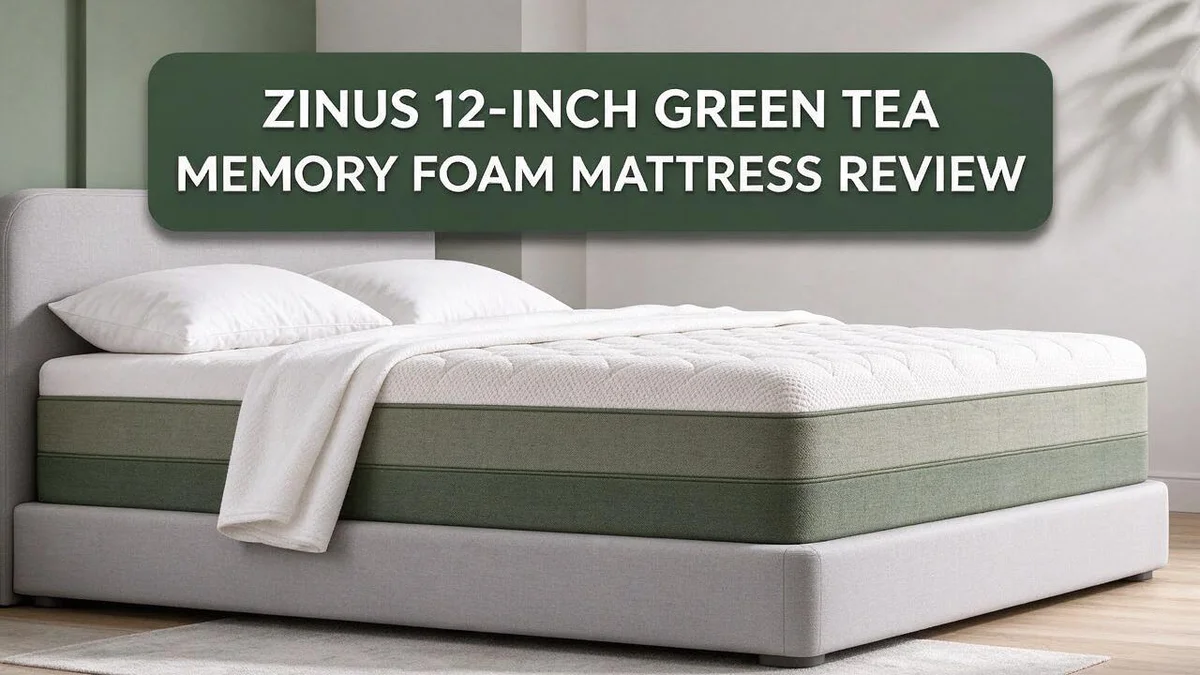
Zinus 12-Inch Green Tea Memory Foam Mattress Review
Looking for a bed that feels cool and comfy at night? The Zinus 12 Inch Green Tea Memory Foam Mattress is worth a close look. It uses green tea and ActivCharcoal infused foam, so it aims to keep you fresh while you sleep.
Many shoppers want a mattress that feels good without feeling too soft or too hot. This model has a cool to touch cover and a triple cooling design. Its three layers of CertiPUR US certified foam work together for steady support.
Sleepers often ask if this bed really relieves pressure. Owners often say they wake up with no pressure points. Expert tests tell a different story, though. In this review, you will see both the good and the not so good sides, so you can decide if it fits your sleep style.
In a Nutshell
-
Three layers of foam: This 12 inch mattress stacks three layers of CertiPUR US certified foam. The surface feels steady under your body, which many side sleepers and back sleepers like.
-
Fiberglass free build: The materials skip fiberglass, so you get a cleaner feel for people who want fewer synthetic fillers in their bed.
-
Green tea and charcoal foam: The foam includes green tea and ActivCharcoal. Many shoppers enjoy the fresh feel this brings to their nightly routine.
-
Twin size details: The twin option measures 38 inches wide by 75 inches long. It suits kids’ rooms, guest rooms, and small apartments where space matters.
-
A gentle hug, not a deep sink: Testers recorded about 1.96 inches of sinkage, so the bed gives slight contouring rather than a cradle feel.
-
Firmness depends on your body: Some reviewers call it firm, while others say it feels softer than average. Lie on it for a few minutes in a store or check the return policy before you decide.
Materials and Construction


Last update on 2026-10-27 / Affiliate links / Images from Amazon Product Advertising API
Every night, the materials decide how your body feels on the mattress. This model uses a layered build that aims to balance comfort and support.
The top feel matters most. A cool to touch cover helps the surface feel fresh when you first slide under the sheets.
This model lists a triple cooling setup. That label points to cover and foam choices working together. Sleepers should judge it by how their own skin feels.
Seven zones aim at pressure points. The design uses seven zone pressure relief. Different areas of the foam respond to different parts of the body.
Pressure relief claims deserve a closer look. NapLab testers said pressure relief really struggles on this bed. Owner feedback tells a different story, so both views matter.
Real sleepers report comfort. Many customers say they feel no pressure points while they rest. Their experience depends on body weight and sleep style.
Detailed foam density figures are not clearly shared for this model. Shoppers who want exact numbers should check the product page. Those details help you compare it with other options.
Layers work as a team. Each foam layer plays a role in cushioning, support, and airflow. When the layers match your needs, the bed feels balanced.
Side sleepers often need more give at the shoulder and hip. Back sleepers usually want steady support under the lower back. Stomach sleepers may prefer a firmer surface.
Mattress covers matter too. The outer fabric touches your skin all night. A smooth, soft cover can make the surface feel more inviting.
Try a quick home check. Lie down for ten minutes in your usual sleep position. Notice whether your hips and shoulders feel cradled or stuck.
Good materials make a mattress worth testing. The real verdict comes after several nights of sleep. Give it a fair trial and note how you wake up.
Cooling Performance
Hot sleepers often worry that memory foam holds onto heat. That concern is fair, since dense foam can feel warm as the body sinks in. Cooling comfort depends on how well the surface moves warmth away from your skin.
Airflow plays a big role in this. When air moves through the top layers, heat has a way to escape. A surface that does not sink too deeply also keeps the body from trapping warmth around the hips and shoulders.
Your bedroom matters just as much as the mattress. A cool room helps any bed feel more comfortable. Try lowering the thermostat a few degrees before bedtime.
Bedding choices can make a real difference too. Breathable cotton or bamboo sheets let warmth pass through more easily. Light pajamas made from natural fabrics also help you stay dry through the night.
A fan placed near the bed keeps air moving. Many sleepers find this simple step makes a noticeable change.
Humidity can also affect how warm you feel. Damp air makes the skin feel sticky, even on a cool surface. A dehumidifier or an open window can ease that feeling on muggy nights.
Pay attention to warning signs in the morning. Waking with a damp neck or a sweaty back suggests the bed holds too much heat for you. Noting these patterns helps you judge the bed fairly.
Side sleepers often press more body surface into the mattress, so they may notice warmth sooner. Back sleepers may feel heat in other areas instead.
Body temperature shifts with the seasons, exercise, and stress. One night tells only part of the story. Give your body a week or two to adjust before you decide.
Our research does not include lab temperature readings for this model. Personal testing offers the clearest answer. Check the trial or return policy so you can sleep on it at home.
Pressure Relief and Support
Pressure relief and support work together in every good mattress. This bed aims to ease pressure while keeping your spine in a natural line.
Pressure relief depends on how the top layer responds to your weight. Soft areas like the hips and shoulders need room to sink a little.
Support is the other half of the story. Your spine needs a steady base so your back does not sag during the night.
Independent testers found that pressure relief really struggled on this bed. If your hips or shoulders often ache, keep that result in mind.
Side sleepers usually need the most cushioning. The shoulder and hip carry most of the weight, so these areas need gentle give.
Back sleepers often do well with a steadier feel. A firm surface keeps the lower back supported while the body rests flat.
Stomach sleepers need a firm base. Soft layers can let the hips drop, which can strain the lower back over time.
Core support comes from the base foam under the comfort layers. Weak base layers can collapse over time, so the bed slowly loses its shape.
Try a simple test before you commit. Lie in your usual sleep position for ten minutes and check whether your spine feels straight.
Body weight also changes how a mattress feels. Heavier sleepers may sink more deeply, which can reduce support for the spine.
A trial period gives you time to judge comfort over several nights. Short tests can miss problems that only appear after a full week.
Keep an eye on how you feel after a few weeks. Morning stiffness or sore joints can signal that the support is not right for you.
Top 3 Alternatives
Looking for a different memory foam bed? These three picks offer comfort with different feels.
Nectar Memory Foam

Last update on 2026-10-25 / Affiliate links / Images from Amazon Product Advertising API
Nectar Memory Foam offers a plush, cloud-like feel. Many sleepers enjoy how it cradles the shoulders and hips. The layers work together to ease pressure points through the night.
The cooling cover helps you stay comfortable all night long. It also reduces motion transfer, so your partner can shift without waking you.
This pick works well for side sleepers who want softness.
Tuft & Needle Original

Last update on 2026-10-25 / Affiliate links / Images from Amazon Product Advertising API
Tuft & Needle Original uses a dense foam that feels firm and supportive. Its simple design makes it easy to live with every day.
The surface gives a gentle bounce. Back and stomach sleepers often love this steady feel. Your body stays aligned without sinking too deep into the mattress.
Choose this option if you want a firmer bed that still feels comfortable.
Linenspa Memory Foam

Last update on 2026-10-21 / Affiliate links / Images from Amazon Product Advertising API
Linenspa Memory Foam brings a soft, comforting feel to any bedroom. It suits guest rooms and kids’ rooms well.
The foam contours to your body shape. It relieves pressure on the hips and lower back. The cover is easy to remove and clean, so keeping it fresh takes little effort.
This is a practical choice for everyday comfort.
Firmness and Bounce
Firmness is a personal choice. Some sleepers want a solid surface, while others want a soft, sinking feel. This model leans toward the firmer side for many people.
Reviewers do not fully agree on this point. One Reddit user called it really firm. Other reviewers say it feels softer than average. Both views can be true, depending on your body and how you sleep.
Your body weight changes how the bed feels. A lighter sleeper may notice a firmer surface. Heavier bodies usually press deeper into foam, so they often feel more give.
Sinkage tells a clear story. In NapLab tests, the bed sank about 1.96 inches. That is a small dip. Shallow sinkage means less cradling, so your body stays closer to the top of the mattress.
Bounce works differently here. This bed has very low bounce. Your body sinks in slowly and rises slowly too. Many people find this feels calm and steady.
Low bounce has real benefits. Movement stays put when your partner shifts during the night. You feel less of their motion through the surface. Couples often notice this first.
Low bounce also has downsides. Getting out of bed can take a little more effort. Some sleepers miss the lift that springy foam provides. Getting in and out may feel slower than on a more responsive mattress.
Try lying on the bed in a store if you can. Spend several minutes on your usual sleeping position. Notice how your shoulders and hips feel. A surface that seems firm at first may soften a little as your body settles in. Give yourself a few nights to adjust before you decide.
Value and Price Positioning
Start with fit before you compare anything else. A mattress does its best work when it suits your sleep style and your room. This Zinus model suits people who want a tall, cooling bed with a clear feature list.
Look closely at what the build offers. The 12 inch height, three layers of CertiPUR-US certified foam, and cool-to-touch cover give you a full feature set. Many shoppers want that mix in one bed, so check whether it matches your goals.
Compare the sibling models side by side. Zinus offers several related designs, including the Ultra Cooling Green Tea and Signature lines. Lay them out next to each other. Check the height, cover type, and foam mix before you decide.
A shorter model may fit some needs. The 6 inch Gel Infused and 6 inch Green Tea options cover smaller spaces. They may suit a guest room, a child’s bedroom, or a temporary setup in a new home.
Check the size chart first. The twin measures 38 inches wide and 75 inches long. The sources do not list other sizes, so confirm the full range on the product page. Measure your bed frame, stairs, and doorways too. A mattress that does not fit through the door creates a headache you do not need.
Plan for long term comfort. A mattress you use every night should feel right over time, not just on the first evening. Try to sleep on it for several nights before you judge it. Notice how your back and neck feel on the third or fourth morning.
Ask what you need from a bed. Make a short list of your must haves, such as cooling, extra height, or a cover that feels soft. Then compare each option against that list. This simple step keeps your choice clear and stops you from getting distracted by extra features you may never use.
Final thought. The right mattress fits your room, your size needs, and your comfort goals. This Zinus model can serve many sleepers well when those goals line up. Take your time, compare the options, and choose with confidence.
Pros and Cons
Pros
- Many customers report no pressure points during the night.
- Shoppers often describe good sleep quality on this bed.
- The listing highlights 7 zone pressure relief for targeted support.
- The green tea and charcoal infused foam gives the surface a fresh feel.
Cons
- Edge support details are not clearly listed.
- Hot sleepers may still notice warmth through the night.
- Reviews vary, so one opinion may not match your own comfort.
Who Should Buy It
Shoppers new to memory foam often feel unsure at first. This bed offers a gentle way to start. It suits people who want to test foam without a big change.
Guest rooms make a smart home for this mattress. Visitors get a comfortable night without much fuss. Occasional sleepers rarely need a complicated bed.
Teens moving out of a kids bed often do well here. The look feels grown up, and the feel is easy to get used to.
People tired of old springs may enjoy a quieter surface. Foam does not creak the way worn coils often do. A calm night feels good after years of noise.
Fans of a simple build can look closely here. The design stays clean and focused. There are no fancy extras to sort through, so choices feel easier. Many buyers like that straightforward approach.
Anyone craving a deep hug may prefer another model. Some sleepers want to sink deep into thick foam. This bed may not give that feeling, so compare your options first.
Students in dorms or small flats may find it useful. A single bed setup fits many compact rooms. Small spaces often need simple furniture that works hard.
Parents choosing a bed for a child may want a closer look. A growing child needs steady support as the years pass. Check the details before you decide.
Frequent travelers may enjoy a bed that feels familiar. Returning to a known surface can help rest come faster. Familiar comfort makes home feel close.
Solo sleepers who like a cozy spot may feel right at home. A twin size keeps the bed snug. Snug can feel safe for many people.
Ready to decide? Start with your sleep needs. Write down what matters most to you. A short list keeps the choice simple.
Final Verdict
Here is the bottom line. This mattress suits people who want a firm, steady feel with a light touch of contour. It does not offer the deep hug that many memory foam fans expect.
Think about how you sleep. Side sleepers who want heavy cradling may find the surface too shallow. Back sleepers and combination sleepers often feel more at home here.
The reviews point in mixed directions. Some owners call the bed really firm. Others say it feels softer than average. Both views can be true, since every body reacts to foam in its own way.
Testing shows a clear tradeoff. The foam sinks only a small amount and bounces very little. That means pressure relief is modest, and one independent tester felt it struggled in this area. Yet the steady base can feel supportive for people who dislike sinking.
Some sleepers need a short adjustment period. Their bodies may take time to adapt to a firmer surface. Others notice the difference right away and feel at ease from the start.
Think about your bed frame too. A firm mattress works best on a sturdy base that does not sag. An even foundation keeps the surface level across the whole bed.
Our advice is simple. Choose this bed if you want a calm, stable surface and you accept a limited sink. Skip it if you want a plush, cloud like hold.
If the seller offers a trial period, use it. Lie on the bed each night and note how your back and shoulders feel each morning. Your own notes will show whether the firm feel suits your routine.
In short, this mattress earns a spot on the shortlist for steady sleepers. Compare it with your other options, and let your own nights guide the final choice.
Frequently Asked Questions
Is the foam safe to use?
The mattress uses three layers of CertiPUR US certified foam. This certification means the foam meets set standards for materials. The build is also fiberglass free, so you do not get glass fibers inside the bed.
Which sleep positions suit this mattress?
Back sleepers often enjoy the steady surface. The firm feel keeps the body on top of the foam, while the light contour adds a little hug. Side sleepers may want to test it first, since the sink stays limited.
Does the cover feel cool?
The cover is listed as cool to the touch. That cool surface can feel nice when you first lie down. Heat retention still varies from person to person, so notice how you feel after several nights.
What makes the foam different?
The foam contains green tea and ActivCharcoal. These additions set it apart from plain memory foam. The mix aims to create a fresher surface, though your own experience will decide how well it works for you.
How tall is this mattress?
It stands 12 inches tall, which gives a fuller look on the bed frame. Check your sheet pocket depth before you order sheets. A thicker bed needs deeper fitted sheets to stay in place.

Hi, I’m Rose Callahan, the creator of SpaceSmart.blog.
I review home essentials, gadgets, security tools, kitchen gear, furniture, and cleaning products from Amazon.
My goal is to help you create a smarter, more organized, and comfortable living space.
I test and share practical products that make everyday home life easier and more efficient.
Join me as I explore clever ways to upgrade your home—one smart find at a time.